吁 (xū/yù) means "to sigh; to appeal" in Chinese. It has 6 strokes with the radical 口, and is HSK Level 7.
Rated 3.2/5 in difficulty (challenging).
Harder than 9% of HSK Level 7 characters.
Appears in 3+ common words including 呼吁 (hū yù), 吁请 (yù qǐng), 气喘吁吁 (qì chuǎn xū xū).
Due to its 6 strokes, Hanzi Writer's error detection shows 吁 requires focused practice — most learners need 10+ attempts for consistent accuracy.
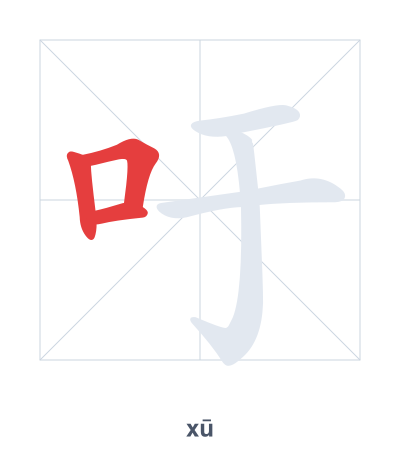
Open Hanzi Writer to see the animated stroke order and practice writing 吁 with real-time feedback.
The character 吁 (xū/yù) is written with 6 strokes. Follow the standard Chinese stroke order: top to bottom, left to right, outside before inside. The radical 口 is one of its key components.
Practice the correct stroke order with the Hanzi Writer app to see animated stroke-by-stroke guidance with real-time feedback.
吁 means to sigh; to appeal.
This is a polyphonic character with readings: xū, yù.
As an HSK Level 7 character, 吁 is an intermediate-level character.
吁 combines the mouth radical 口 (speaking or sound) with 于 (yú, a phonetic component that also suggests a prolonged exhalation). The character originally depicted a sighing sound, where the mouth releases breath in a drawn-out expression, later extended to mean 'to sigh' or 'to appeal.'
💡 Memory Tip: Picture a wide-open mouth (口) releasing a long curvy sigh (于) as someone says 'Xuuuu...' to call for help.
环保组织呼吁全世界减少塑料制品的使用。
huán bǎo zǔ zhī hū yù quán shì jiè jiǎn shǎo sù liào zhì pǐn de shǐ yòng
Environmental organizations are calling on the world to reduce the use of plastic products.
灾民代表向政府吁请提供更多的救灾物资。
zāi mín dài biǎo xiàng zhèng fǔ yù qǐng tí gōng gèng duō de jiù zāi wù zī
Representatives of the disaster victims appealed to the government for more relief supplies.
跑完五千米后,他累得气喘吁吁。
pǎo wán wǔ qiān mǐ hòu tā lèi dé qì chuǎn xū xū
After running five kilometers, he was panting and exhausted.
Open Hanzi Writer to see the animated stroke order and practice writing 吁 with real-time feedback.
✨ Animated stroke order · Handwriting recognition · HSK-graded practice · Free to use
The left part is the mouth radical (口), showing this character relates to actions of the mouth. The right part is 于, which provides the sound and hints at the idea of exhaling or calling out. Together they create the meanings "to sigh" and "to appeal," both actions done through the mouth.