猾 (huá) means "Sly; cunning" in Chinese. It has 12 strokes with the radical 犭, and is HSK Level 7.
Rated 4.2/5 in difficulty (advanced).
Harder than 72% of HSK Level 7 characters.
Appears in 3+ common words including 狡猾 (jiǎo huá), 老奸巨猾 (lǎo jiān jù huá), 狡猾的人 (jiǎo huá de rén).
Due to its 12 strokes, Hanzi Writer's error detection shows 猾 requires focused practice — most learners need 10+ attempts for consistent accuracy.
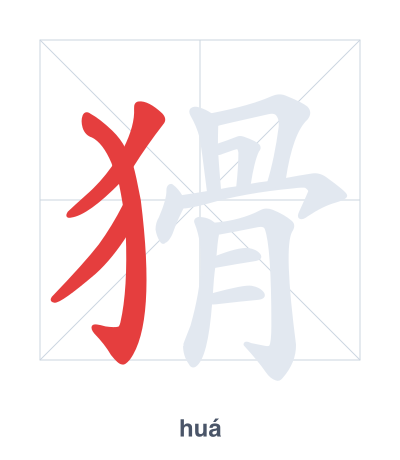
Open Hanzi Writer to see the animated stroke order and practice writing 猾 with real-time feedback.
The character 猾 (huá) is written with 12 strokes. Follow the standard Chinese stroke order: top to bottom, left to right, outside before inside. The radical 犭 is one of its key components.
Practice the correct stroke order with the Hanzi Writer app to see animated stroke-by-stroke guidance with real-time feedback.
猾 means Sly; cunning.
As an HSK Level 7 character, 猾 is an intermediate-level character.
This character is a phono-semantic compound: the radical 犭 indicates an animal, while 骨 (gǔ, bone) provides the pronunciation. Originally referring to a type of cunning beast, it evolved to mean sly or crafty behavior, like a fox or trickster animal.
💡 Memory Tip: Imagine a sneaky dog (犭) burying a bone (骨) to deceive others into thinking it's gone.
狐狸非常狡猾。
hú lí fēi cháng jiǎo huá
The fox is very cunning.
这个商人老奸巨猾。
zhè ge shāng rén lǎo jiān jù huá
This businessman is very crafty and cunning.
他是个狡猾的人。
tā shì gè jiǎo huá de rén
He is a cunning person.
Open Hanzi Writer to see the animated stroke order and practice writing 猾 with real-time feedback.
✨ Animated stroke order · Handwriting recognition · HSK-graded practice · Free to use
猾 is made of the radical 犭 (dog radical) on the left and the phonetic component 骨 (bone) on the right. The dog radical suggests a connection to animal behavior, and the meaning 'sly' or 'cunning' comes from the idea of a tricky or sneaky animal. The right side 骨 gives the pronunciation huá, though the character's full meaning comes from the combination.