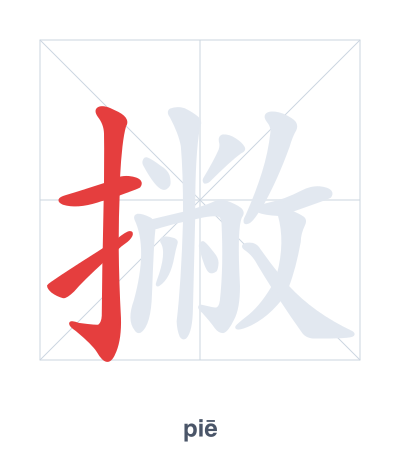
撇 (piē) means "left-falling stroke; to cast aside; to skim" in Chinese. It has 14 strokes with the radical 扌. Difficulty: 4.2/5.
left-falling stroke; to cast aside; to skim
The character 撇 (piē) is written with 14 strokes. Follow the standard Chinese stroke order: top to bottom, left to right, outside before inside. The radical 扌 is one of its key components.
Practice the correct stroke order with the Hanzi Writer app to see animated stroke-by-stroke guidance with real-time feedback.
撇 is pronounced piē in Mandarin Chinese. It means left-falling stroke; to cast aside; to skim.
This is a polyphonic character with readings: piē, piě.
我们先撇开这件事不谈,讨论一下明天的方案。
wǒ men xiān piē kāi zhè jiàn shì bù tán tǎo lùn yī xià míng tiān de fāng àn
Let's set this matter aside for now and discuss tomorrow's plan.
听了他的解释,小妹妹不以为然地撇撇嘴。
tīng le tā de jiě shì xiǎo mèi mèi bù yǐ wéi rán dì piē piě zuǐ
After hearing his explanation, the little sister curled her lip in disapproval.
他天生就是一个左撇子,习惯用左手写字。
tā tiān shēng jiù shì yí gè zuǒ piě zi xí guàn yòng zuǒ shǒu xiě zì
He is a natural left-hander and is used to writing with his left hand.
书法老师说,写好撇捺是练好汉字的基础。
shū fǎ lǎo shī shuō xiě hǎo piē nà shì liàn hǎo hàn zì de jī chǔ
The calligraphy teacher said that writing left-falling and right-falling strokes well is the foundation of practicing Chinese characters.
Open Hanzi Writer to see the animated stroke order and practice writing 撇 with real-time feedback.