Hanzi Writer

How to Write 僮 (tóng)

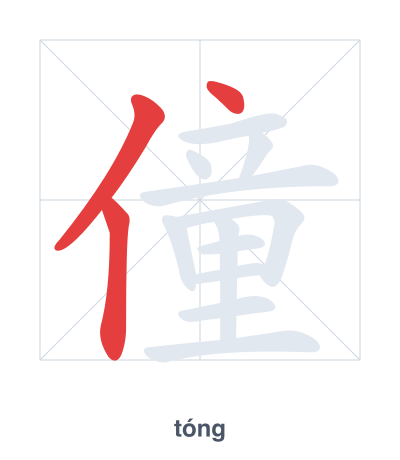
僮 (tóng) means "servant boy" in Chinese. It has 14 strokes with the radical 亻. Difficulty: 3.9/5.

tóng
14 strokes Radical: 亻 Difficulty: 3.9/5

servant boy

How to Write 僮

The character (tóng) is written with 14 strokes. Follow the standard Chinese stroke order: top to bottom, left to right, outside before inside. The radical is one of its key components.

Practice the correct stroke order with the Hanzi Writer app to see animated stroke-by-stroke guidance with real-time feedback.

Meaning & Pronunciation

is pronounced tóng in Mandarin Chinese. It means servant boy.

Common Words with 僮

书僮 shū tóng
Study attendant
僮仆 tóng pú
servant
僮子 tóng zi
young servant

Example Sentences

古代书生有书僮。

gǔ dài shū shēng yǒu shū tóng

Ancient scholars had study attendants.

家里雇了几个僮仆。

jiā lǐ gù le jǐ gè tóng pú

The family hired several servants.

那个僮子很聪明。

nà ge tóng zi hěn cōng míng

That young servant is very smart.

Similar Characters

bàng
Stroke order practice for 僮 - tóng

Practice Writing 僮 (tóng)

Open Hanzi Writer to see the animated stroke order and practice writing 僮 with real-time feedback.

Frequently Asked Questions about 僮

Related Characters