咨 (zī) means "to consult; to inquire" in Chinese. It has 9 strokes with the radical 口, and is HSK Level 6.
Rated 4/5 in difficulty (challenging).
Harder than 44% of HSK Level 6 characters.
Appears in 3+ common words including 咨询 (zī xún), 咨询台 (zī xún tái), 咨询师 (zī xún shī).
Due to its 9 strokes, Hanzi Writer's error detection shows 咨 requires focused practice — most learners need 10+ attempts for consistent accuracy.
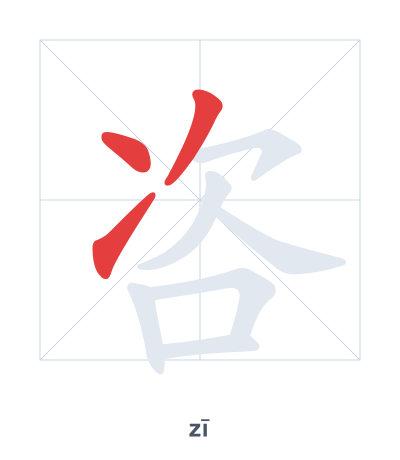
Open Hanzi Writer to see the animated stroke order and practice writing 咨 with real-time feedback.
The character 咨 (zī) is written with 9 strokes. Follow the standard Chinese stroke order: top to bottom, left to right, outside before inside. The radical 口 is one of its key components.
Practice the correct stroke order with the Hanzi Writer app to see animated stroke-by-stroke guidance with real-time feedback.
咨 means to consult; to inquire.
As an HSK Level 6 character, 咨 is an intermediate-level character.
咨 is a phono-semantic compound. The radical 口 (mouth) suggests speaking or consulting, while 次 (next) provides the sound and hints at proceeding step by step in an inquiry. Together, they evoke the idea of using one's mouth to ask for the next course of action.
💡 Memory Tip: Picture a consultant at a desk, using their mouth (口) to ask, 'What's next?' (次) as they inquire about the next steps.
我想咨询一下。
wǒ xiǎng zī xún yī xià
I would like to inquire.
咨询台在门口。
zī xún tái zài mén kǒu
The information desk is at the entrance.
他是一位心理咨询师。
tā shì yī wèi xīn lǐ zī xún shī
He is a psychological counselor.
Open Hanzi Writer to see the animated stroke order and practice writing 咨 with real-time feedback.
✨ Animated stroke order · Handwriting recognition · HSK-graded practice · Free to use
The character 咨 combines the 'speech' component 次 on top and the 'mouth' radical 口 below. This structure suggests using your mouth to inquire, which directly connects to its meaning of consulting or asking questions.