含 (hán) means "to contain, to hold in the mouth" in Chinese. It has 7 strokes with the radical 口, and is HSK Level 4.
Rated 3.5/5 in difficulty (challenging).
Harder than 29% of HSK Level 4 characters.
Appears in 3+ common words including 包含 (bāo hán), 含义 (hán yì), 含有 (hán yǒu).
Due to its 7 strokes, Hanzi Writer's error detection shows 含 requires focused practice — most learners need 10+ attempts for consistent accuracy.
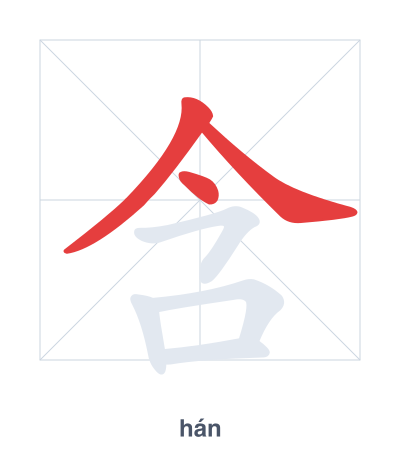
Open Hanzi Writer to see the animated stroke order and practice writing 含 with real-time feedback.
The character 含 (hán) is written with 7 strokes. Follow the standard Chinese stroke order: top to bottom, left to right, outside before inside. The radical 口 is one of its key components.
Practice the correct stroke order with the Hanzi Writer app to see animated stroke-by-stroke guidance with real-time feedback.
含 means to contain, to hold in the mouth.
As an HSK Level 4 character, 含 is an intermediate-level character.
含 combines a mouth (口) with 今 (jīn, originally depicting a lid or cover) above it, suggesting something held inside the mouth. The ancient form showed a mouth with an object inside, emphasizing the idea of containing or holding in the mouth.
💡 Memory Tip: Picture a mouth (口) with a lid (今) clamped shut, containing a secret too precious to spill.
这个价格包含晚餐。
zhè ge jià gé bāo hán wǎn cān
This price includes dinner.
这个词有什么含义?
zhè ge cí yǒu shén me hán yì
What is the meaning of this word?
牛奶含有蛋白质。
niú nǎi hán yǒu dàn bái zhì
Milk contains protein.
Open Hanzi Writer to see the animated stroke order and practice writing 含 with real-time feedback.
✨ Animated stroke order · Handwriting recognition · HSK-graded practice · Free to use
含 combines the radical 口 (mouth) at the bottom and 今 (jīn, now) on top. The mouth radical shows the meaning involves the mouth, while 今 provides a phonetic hint for the pronunciation "hán." Together, they suggest something held or contained in the mouth.