Hanzi Writer

How to Write 窘 (jiǒng)

窘 (jiǒng) means "Embarrassed; distressed" in Chinese. It has 12 strokes with the radical 穴. Difficulty: 4.2/5.

jiǒng
12 strokes Radical: 穴 Difficulty: 4.2/5

Embarrassed; distressed

How to Write 窘

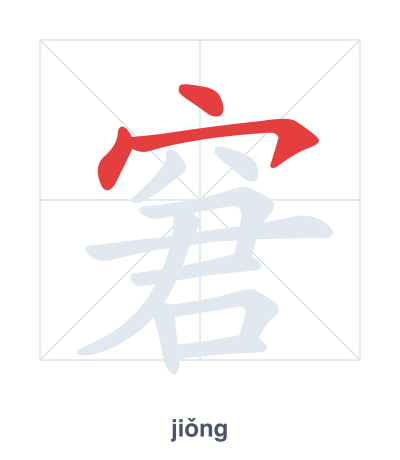
The character (jiǒng) is written with 12 strokes. Follow the standard Chinese stroke order: top to bottom, left to right, outside before inside. The radical is one of its key components.

Practice the correct stroke order with the Hanzi Writer app to see animated stroke-by-stroke guidance with real-time feedback.

Meaning & Pronunciation

is pronounced jiǒng in Mandarin Chinese. It means Embarrassed; distressed.

Common Words with 窘

窘迫 jiǒng pò
Poverty-stricken; awkward
窘态 jiǒng tài
Embarrassed look
困窘 kùn jiǒng
Embarrassed / In financial straits

Example Sentences

生活非常窘迫。

shēng huó fēi cháng jiǒng pò

Life is very impoverished and difficult.

他露出了窘态。

tā lù chū le jiǒng tài

He showed signs of embarrassment.

处境十分困窘。

chǔ jìng shí fēn kùn jiǒng

The situation is very difficult and embarrassing.

Similar Characters

zhǎi
yǎo
yǎo
Stroke order practice for 窘 - jiǒng

Practice Writing 窘 (jiǒng)

Open Hanzi Writer to see the animated stroke order and practice writing 窘 with real-time feedback.

Frequently Asked Questions about 窘

Related Characters