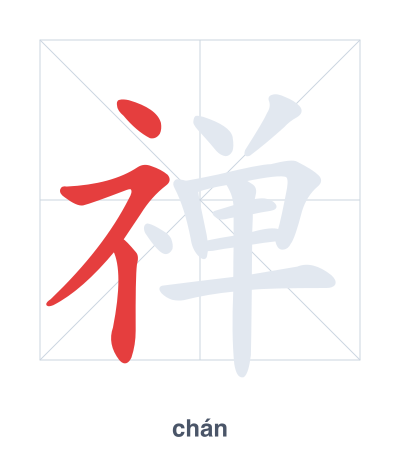
禅 (chán) means "Zen; meditation; to abdicate." in Chinese. It has 12 strokes with the radical 礻. Difficulty: 4.2/5.
Zen; meditation; to abdicate.
The character 禅 (chán) is written with 12 strokes. Follow the standard Chinese stroke order: top to bottom, left to right, outside before inside. The radical 礻 is one of its key components.
Practice the correct stroke order with the Hanzi Writer app to see animated stroke-by-stroke guidance with real-time feedback.
禅 is pronounced chán in Mandarin Chinese. It means Zen; meditation; to abdicate..
This is a polyphonic character with readings: chán, shàn.
禅宗是中国佛教中影响最为深远的流派之一。
chán zōng shì zhōng guó fó jiào zhōng yǐng xiǎng zuì wèi shēn yuǎn de liú pài zhī yī
Zen Buddhism is one of the most influential schools of Chinese Buddhism.
老僧在静室里闭目坐禅,神态安详。
lǎo sēng zài jìng shì lǐ bì mù zuò chán shén tài ān xiáng
The old monk sat in meditation with his eyes closed in the quiet room, looking serene.
传说远古时期,尧将帝位禅让给了舜。
chuán shuō yuǎn gǔ shí qī yáo jiāng dì wèi shàn ràng gěi le shùn
Legend says that in ancient times, Yao abdicated the throne to Shun.
历代皇帝常去泰山举行盛大的封禅大礼。
lì dài huáng dì cháng qù tài shān jǔ xíng shèng dà de fēng shàn dà lǐ
Emperors of past dynasties often went to Mount Tai to hold grand sacrificial ceremonies.
Open Hanzi Writer to see the animated stroke order and practice writing 禅 with real-time feedback.