Hanzi Writer

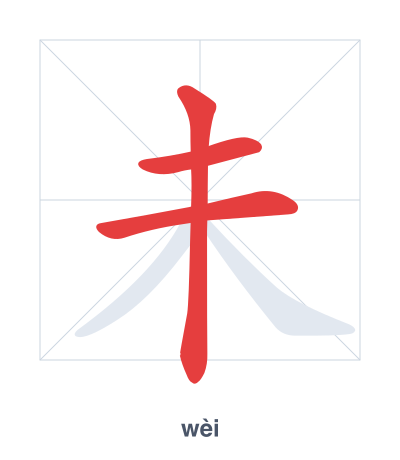
How to Write 未 (wèi)

未 (wèi) means "Not yet / Have not" in Chinese. It has 5 strokes with the radical 木, and is HSK Level 4. Difficulty: 2.9/5.

wèi
HSK Level 4 5 strokes Radical: 木 Difficulty: 2.9/5

Not yet / Have not

How to Write 未

The character (wèi) is written with 5 strokes. Follow the standard Chinese stroke order: top to bottom, left to right, outside before inside. The radical is one of its key components.

Practice the correct stroke order with the Hanzi Writer app to see animated stroke-by-stroke guidance with real-time feedback.

Meaning & Pronunciation

is pronounced wèi in Mandarin Chinese. It means Not yet / Have not.

As an HSK Level 4 character, is an intermediate-level character.

Common Words with 未

未来 wèi lái
Future
未必 wèi bì
Not necessarily / May not
未婚 wèi hūn
Unmarried / Single

Example Sentences

我们要面对未来。

wǒ men yào miàn duì wèi lái

We must face the future.

他未必会来参加。

tā wèi bì huì lái cān jiā

He may not necessarily come to participate.

她现在还是未婚。

tā xiàn zài hái shì wèi hūn

She is still unmarried.

Similar Characters

běn
Stroke order practice for 未 - wèi

Practice Writing 未 (wèi)

Open Hanzi Writer to see the animated stroke order and practice writing 未 with real-time feedback.

Frequently Asked Questions about 未

Related Characters