Hanzi Writer

How to Write 丕 (pī) — Meaning “great; grand”

5 strokes Radical: 一

丕 (pī) means "great; grand" in Chinese. It has 5 strokes with the radical 一.

Rated 2.7/5 in difficulty (moderate).

Appears in 3+ common words including 曹丕 (cáo pī), 丕变 (pī biàn), 丕显 (pī xiǎn).

Hanzi Writer's stroke validation shows learners typically need 5-8 attempts to write 丕 with correct proportion and order.
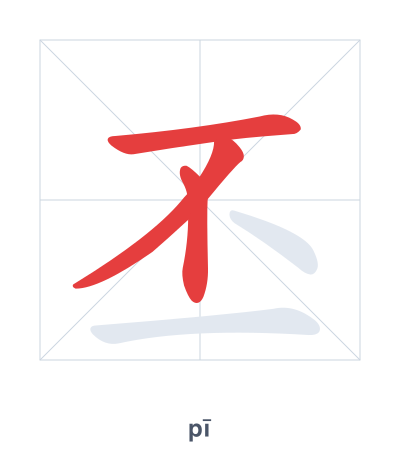
Stroke order practice for 丕 - pī

Practice Writing 丕 (pī)

Open Hanzi Writer to see the animated stroke order and practice writing 丕 with real-time feedback.

The character (pī) is written with 5 strokes. Follow the standard Chinese stroke order: top to bottom, left to right, outside before inside. The radical is one of its key components.

Practice the correct stroke order with the Hanzi Writer app to see animated stroke-by-stroke guidance with real-time feedback.

means great; grand.

Character
Pinyinpī (pi)
Meaninggreat; grand
Strokes5
Radical
Difficulty2.7/5

丕 is a phono-semantic compound. The radical 一 (one) signifies 'the greatest' or 'the ultimate', and 不 (originally pronounced pī in this context) provides the phonetic component. Together they form the meaning 'great, grand'.

💡 Memory Tip: Picture a massive horizontal bar (一) placed right above the character 不 (no), boldly overriding all negativity to proclaim something truly grand.

cáo pī
Cao Pi (historical figure)
pī biàn
great change; radical transformation
pī xiǎn
greatly manifest; illustrious

曹丕是曹操的儿子。

cáo pī shì cáo cāo de ér zi

Cao Pi is the son of Cao Cao.

这里的环境发生了丕变。

zhè lǐ de huán jìng fā shēng le pī biàn

The environment here has undergone a great change.

他的功绩非常丕显。

tā de gōng jì fēi cháng pī xiǎn

His achievements are very illustrious.

Character Pinyin Strokes Radical
(current) 5
wàn 3
zhàng 3
sān 3
Stroke order practice for 丕 - pī

Practice Writing 丕 (pī)

Open Hanzi Writer to see the animated stroke order and practice writing 丕 with real-time feedback.

✨ Animated stroke order · Handwriting recognition · HSK-graded practice · Free to use

Frequently Asked Questions about 丕

丕 is made by adding a horizontal stroke at the bottom of the character 不 (bù, meaning 'no' or 'not'). The extra horizontal line suggests something 'great' or 'grand' that goes beyond ordinary negation, turning 'not' into an intensified form.

Characters with Radical 一

Other 5-Stroke Characters