Hanzi Writer

How to Write 顽 (wán)

顽 (wán) means "Stubborn / Naughty" in Chinese. It has 10 strokes with the radical 页, and is HSK Level 6. Difficulty: 4.2/5.

wán
HSK Level 6 10 strokes Radical: 页 Difficulty: 4.2/5

Stubborn / Naughty

How to Write 顽

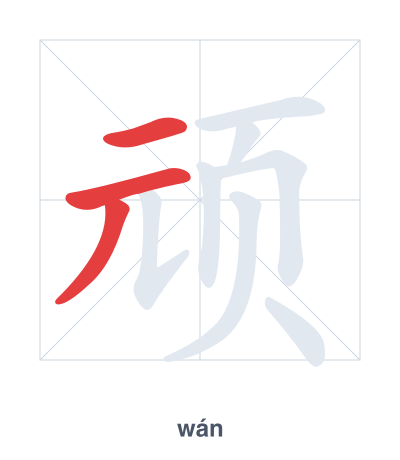
The character (wán) is written with 10 strokes. Follow the standard Chinese stroke order: top to bottom, left to right, outside before inside. The radical is one of its key components.

Practice the correct stroke order with the Hanzi Writer app to see animated stroke-by-stroke guidance with real-time feedback.

Meaning & Pronunciation

is pronounced wán in Mandarin Chinese. It means Stubborn / Naughty.

As an HSK Level 6 character, is an intermediate-level character.

Common Words with 顽

顽皮 wán pí
Naughty / Mischievous
顽固 wán gù
Obstinate / Stubborn
顽强 wán qiáng
Tenacious / Indomitable

Example Sentences

这个孩子很顽皮。

zhè ge hái zi hěn wán pí

This child is very naughty and playful.

他的思想很顽固。

tā de sī xiǎng hěn wán gù

His thinking is very stubborn.

他的意志很顽强。

tā de yì zhì hěn wán qiáng

His will is very tenacious.

Similar Characters

dǐng
qǐng
hān
Stroke order practice for 顽 - wán

Practice Writing 顽 (wán)

Open Hanzi Writer to see the animated stroke order and practice writing 顽 with real-time feedback.

Frequently Asked Questions about 顽

Related Characters