Hanzi Writer

How to Write 胚 (pēi)

胚 (pēi) means "Embryo" in Chinese. It has 9 strokes with the radical 月. Difficulty: 4/5.

pēi
9 strokes Radical: 月 Difficulty: 4/5

Embryo

How to Write 胚

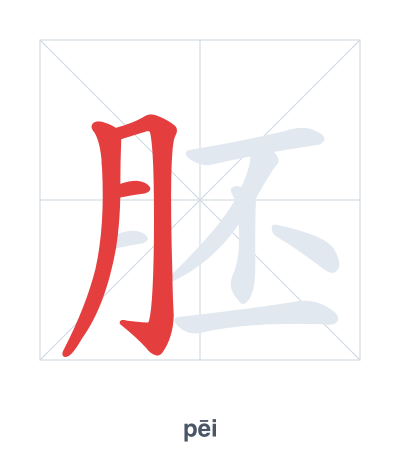
The character (pēi) is written with 9 strokes. Follow the standard Chinese stroke order: top to bottom, left to right, outside before inside. The radical is one of its key components.

Practice the correct stroke order with the Hanzi Writer app to see animated stroke-by-stroke guidance with real-time feedback.

Meaning & Pronunciation

is pronounced pēi in Mandarin Chinese. It means Embryo.

Common Words with 胚

胚胎 pēi tāi
Embryo
胚芽 pēi yá
Germ (of a seed)
胚根 pēi gēn
Radicle (embryonic root)

Example Sentences

胚胎在母体内生长。

pēi tāi zài mǔ tǐ nèi shēng zhǎng

The embryo grows inside the mother's body.

这种面包含有胚芽。

zhè zhǒng miàn bāo hán yǒu pēi yá

This bread contains wheat germ.

种子长出了胚根。

zhǒng zi zhǎng chū le pēi gēn

The seed has grown an embryonic root.

Similar Characters

ruǎn
péng
Stroke order practice for 胚 - pēi

Practice Writing 胚 (pēi)

Open Hanzi Writer to see the animated stroke order and practice writing 胚 with real-time feedback.

Frequently Asked Questions about 胚

Related Characters