Hanzi Writer

How to Write 鼻 (bí)

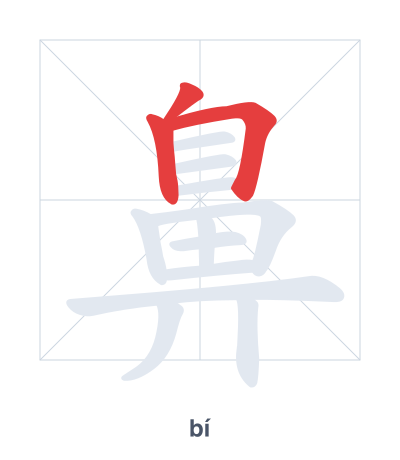
鼻 (bí) means "Nose" in Chinese. It has 14 strokes with the radical 鼻, and is HSK Level 5. Difficulty: 3.9/5.

HSK Level 5 14 strokes Radical: 鼻 Difficulty: 3.9/5

Nose

How to Write 鼻

The character (bí) is written with 14 strokes. Follow the standard Chinese stroke order: top to bottom, left to right, outside before inside. The radical is one of its key components.

Practice the correct stroke order with the Hanzi Writer app to see animated stroke-by-stroke guidance with real-time feedback.

Meaning & Pronunciation

is pronounced in Mandarin Chinese. It means Nose.

As an HSK Level 5 character, is an intermediate-level character.

Common Words with 鼻

鼻子 bí zi
Nose
鼻涕 bí tì
Nasal mucus; snot
鼻孔 bí kǒng
Nostril

Example Sentences

他的鼻子很高。

tā de bí zi hěn gāo

He has a high-bridged nose.

我感冒流鼻涕了。

wǒ gǎn mào liú bí tì le

I have a cold and a runny nose.

人有两个鼻孔。

rén yǒu liǎng gè bí kǒng

Humans have two nostrils.

Similar Characters

qiú
Stroke order practice for 鼻 - bí

Practice Writing 鼻 (bí)

Open Hanzi Writer to see the animated stroke order and practice writing 鼻 with real-time feedback.

Frequently Asked Questions about 鼻

Related Characters