晤 (wù) means "To meet" in Chinese. It has 11 strokes with the radical 日, and is HSK Level 7.
Rated 4.2/5 in difficulty (advanced).
Harder than 62% of HSK Level 7 characters.
Appears in 3+ common words including 会晤 (huì wù), 晤面 (wù miàn), 晤谈 (wù tán).
Due to its 11 strokes, Hanzi Writer's error detection shows 晤 requires focused practice — most learners need 10+ attempts for consistent accuracy.
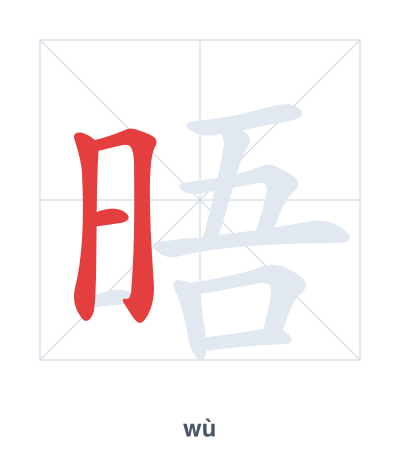
Open Hanzi Writer to see the animated stroke order and practice writing 晤 with real-time feedback.
The character 晤 (wù) is written with 11 strokes. Follow the standard Chinese stroke order: top to bottom, left to right, outside before inside. The radical 日 is one of its key components.
Practice the correct stroke order with the Hanzi Writer app to see animated stroke-by-stroke guidance with real-time feedback.
晤 means To meet.
As an HSK Level 7 character, 晤 is an intermediate-level character.
晤 is a phono-semantic compound. The left radical 日 (sun/day) suggests meetings held in daylight, while the right side 吾 (wú, meaning 'I' or 'my') provides the pronunciation and hints at a personal encounter.
💡 Memory Tip: Picture five mouths (五口 forming 吾) gathered under the bright sun (日) for a meeting.
两国领导人进行会晤。
liǎng guó lǐng dǎo rén jìn háng huì wù
The leaders of the two countries held a meeting.
我们明天晤面。
wǒ men míng tiān wù miàn
We will meet tomorrow.
双方进行了友好晤谈。
shuāng fāng jìn xíng le yǒu hǎo wù tán
The two sides held friendly talks.
Open Hanzi Writer to see the animated stroke order and practice writing 晤 with real-time feedback.
✨ Animated stroke order · Handwriting recognition · HSK-graded practice · Free to use
晤 is a left-right structure: the left side is 日 (sun/day) and the right side is 吾 (wú, meaning 'I' or 'my'). The sun component suggests daytime, so 晤 implies meeting or seeing someone during the day.