Hanzi Writer

How to Write 偈 (jì)

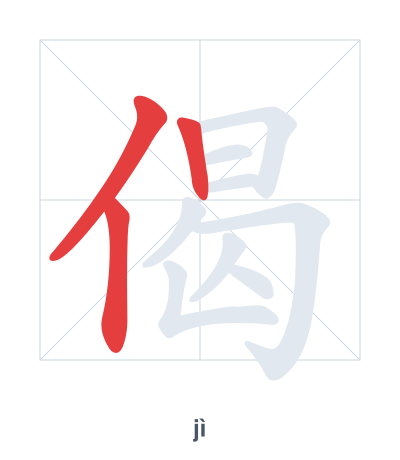
偈 (jì) means "Buddhist hymn; gatha" in Chinese. It has 11 strokes with the radical 亻. Difficulty: 3.9/5.

11 strokes Radical: 亻 Difficulty: 3.9/5

Buddhist hymn; gatha

How to Write 偈

The character (jì) is written with 11 strokes. Follow the standard Chinese stroke order: top to bottom, left to right, outside before inside. The radical is one of its key components.

Practice the correct stroke order with the Hanzi Writer app to see animated stroke-by-stroke guidance with real-time feedback.

Meaning & Pronunciation

is pronounced in Mandarin Chinese. It means Buddhist hymn; gatha.

Common Words with 偈

偈子 jì zi
Buddhist verse; gatha
佛偈 fú jì
Buddhist verse
偈颂 jì sòng
Buddhist hymn; gatha

Example Sentences

这是一首偈子。

zhè shì yī shǒu jì zi

This is a Buddhist verse.

他在读佛偈。

tā zài dú fú jì

He is reading Buddhist verses.

偈颂很有意义。

jì sòng hěn yǒu yì yì

The Buddhist hymn is very meaningful.

Similar Characters

hóu
qīn
Stroke order practice for 偈 - jì

Practice Writing 偈 (jì)

Open Hanzi Writer to see the animated stroke order and practice writing 偈 with real-time feedback.

Frequently Asked Questions about 偈

Related Characters