Hanzi Writer

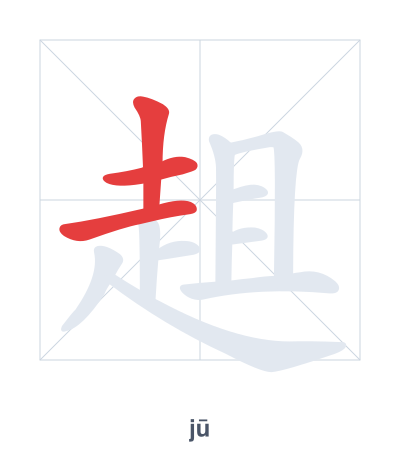
How to Write 趄 (jū)

趄 (jū) means "to lean; to recline; to hesitate" in Chinese. It has 12 strokes with the radical 走. Difficulty: 4.2/5.

/ qiè
12 strokes Radical: 走 Difficulty: 4.2/5

to lean; to recline; to hesitate

How to Write 趄

The character (jū) is written with 12 strokes. Follow the standard Chinese stroke order: top to bottom, left to right, outside before inside. The radical is one of its key components.

Practice the correct stroke order with the Hanzi Writer app to see animated stroke-by-stroke guidance with real-time feedback.

Meaning & Pronunciation

is pronounced in Mandarin Chinese. It means to lean; to recline; to hesitate.

This is a polyphonic character with readings: jū, qiè.

Common Words with 趄

趔趄 liè qiè
To stagger; to stumble.
趄身 jū shēn
to lean one's body
趄坡 jū pō
a slope; a slant

Example Sentences

他打了个趔趄。

tā dǎ le gè liè qiè

He stumbled.

他趄着身子。

tā jū zhe shēn zi

He leaned his body to the side.

走这个趄坡。

zǒu zhè ge jū pō

Walk up this steep slope.

Similar Characters

gǎn
shàn
Stroke order practice for 趄 - jū

Practice Writing 趄 (jū)

Open Hanzi Writer to see the animated stroke order and practice writing 趄 with real-time feedback.

Frequently Asked Questions about 趄

Related Characters