蕉 (jiāo) means "banana / plantain" in Chinese. It has 15 strokes with the radical 艹, and is HSK Level 3.
Rated 4.2/5 in difficulty (advanced).
Harder than 93% of HSK Level 3 characters.
Appears in 3+ common words including 香蕉 (xiāng jiāo), 芭蕉 (bā jiāo), 蕉叶 (jiāo yè).
Due to its 15 strokes, Hanzi Writer's error detection shows 蕉 requires focused practice — most learners need 10+ attempts for consistent accuracy.
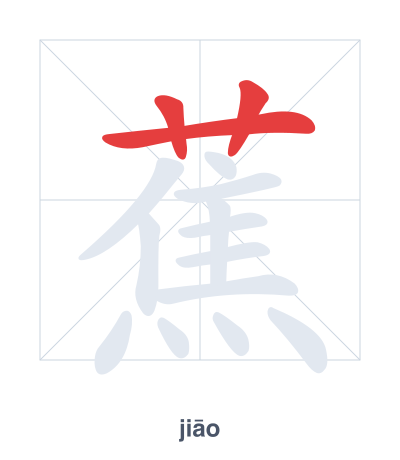
Open Hanzi Writer to see the animated stroke order and practice writing 蕉 with real-time feedback.
The character 蕉 (jiāo) is written with 15 strokes. Follow the standard Chinese stroke order: top to bottom, left to right, outside before inside. The radical 艹 is one of its key components.
Practice the correct stroke order with the Hanzi Writer app to see animated stroke-by-stroke guidance with real-time feedback.
蕉 means banana / plantain.
As an HSK Level 3 character, 蕉 is an intermediate-level character.
蕉 is a phono-semantic compound. The radical 艹 (grass/plant) indicates it's a plant, while 焦 (jiāo, meaning 'scorched') provides the pronunciation and hints at the banana's yellow or brownish color when ripe.
💡 Memory Tip: Imagine a banana plant (艹) where a bird (隹) sits on fire (灬), scorching the bananas to a perfect golden yellow.
我每天吃一根香蕉。
wǒ měi tiān chī yī gēn xiāng jiāo
I eat a banana every day.
窗外有一棵芭蕉。
chuāng wài yǒu yī kē bā jiāo
There is a banana tree outside the window.
蕉叶非常大。
jiāo yè fēi cháng dà
Banana leaves are very large.
Open Hanzi Writer to see the animated stroke order and practice writing 蕉 with real-time feedback.
✨ Animated stroke order · Handwriting recognition · HSK-graded practice · Free to use
蕉 has the radical 艹 (grass) on top, indicating it is a plant. The bottom part is 焦 (jiāo), which gives the sound and originally meant "scorched" — ripe bananas sometimes have brown spots like burn marks. So the structure combines 'grass' with a phonetic hint for pronunciation.