Hanzi Writer

How to Write 艿 (nǎi) — Meaning “taro; bud”

nǎi 5 strokes Radical: 艹

艿 (nǎi) means "taro; bud" in Chinese. It has 5 strokes with the radical 艹.

Rated 2.9/5 in difficulty (moderate).

Appears in 3+ common words including 芋艿 (yù nǎi), 艿头 (nǎi tóu), 艿草 (nǎi cǎo).

Hanzi Writer's stroke validation shows learners typically need 5-8 attempts to write 艿 with correct proportion and order.
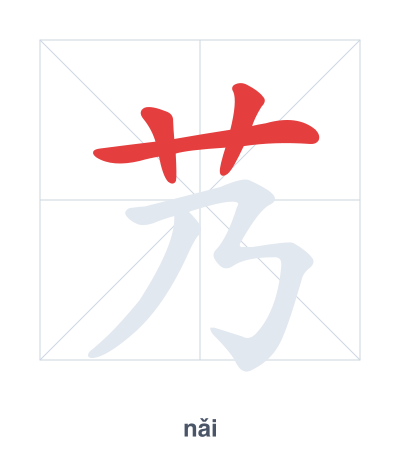
Stroke order practice for 艿 - nǎi

Practice Writing 艿 (nǎi)

Open Hanzi Writer to see the animated stroke order and practice writing 艿 with real-time feedback.

The character (nǎi) is written with 5 strokes. Follow the standard Chinese stroke order: top to bottom, left to right, outside before inside. The radical is one of its key components.

Practice the correct stroke order with the Hanzi Writer app to see animated stroke-by-stroke guidance with real-time feedback.

means taro; bud.

Character
Pinyinnǎi (nai)
Meaningtaro; bud
Strokes5
Radical
Difficulty2.9/5

艿 is a phono-semantic compound: the radical 艹 (grass/plant) indicates it is a type of vegetation, while 乃 (nǎi) provides the pronunciation and visually resembles a budding stem. Together, they depict a grass plant with a tender bud or a taro shoot emerging from the earth.

💡 Memory Tip: Imagine a grass (艹) with a bent stem (乃) that looks like a tiny new taro sprout pushing up from the soil.

yù nǎi
Small taro
nǎi tóu
taro root; bud
nǎi cǎo
Nai grass

我最喜欢吃煮芋艿。

wǒ zuì xǐ huān chī zhǔ yù nǎi

I like eating boiled taro the most.

这些艿头很新鲜。

zhè xiē nǎi tóu hěn xīn xiān

These taro corms are very fresh.

艿草在水边生长。

nǎi cǎo zài shuǐ biān shēng zhǎng

Nai grass grows by the water.

Character Pinyin Strokes Radical
(current) nǎi 5
4
6
jiāo 5
Stroke order practice for 艿 - nǎi

Practice Writing 艿 (nǎi)

Open Hanzi Writer to see the animated stroke order and practice writing 艿 with real-time feedback.

✨ Animated stroke order · Handwriting recognition · HSK-graded practice · Free to use

Frequently Asked Questions about 艿

艿 is a top-down structure: the radical 艹 (grass) on top and 乃 below. The grass radical suggests plant-related meanings, and 乃 serves as a phonetic component indicating the pronunciation nǎi, while the character as a whole refers to taro or a bud.

Characters with Radical 艹

Other 5-Stroke Characters