Hanzi Writer

How to Write 嚎 (háo) — Meaning “To howl / To wail”

háo 17 strokes Radical: 口

嚎 (háo) means "To howl / To wail" in Chinese. It has 17 strokes with the radical 口.

Rated 4.2/5 in difficulty (advanced).

Appears in 3+ common words including 嚎叫 (háo jiào), 嚎啕大哭 (háo táo dà kū), 狼嚎 (láng háo).

Due to its 17 strokes, Hanzi Writer's error detection shows 嚎 requires focused practice — most learners need 10+ attempts for consistent accuracy.
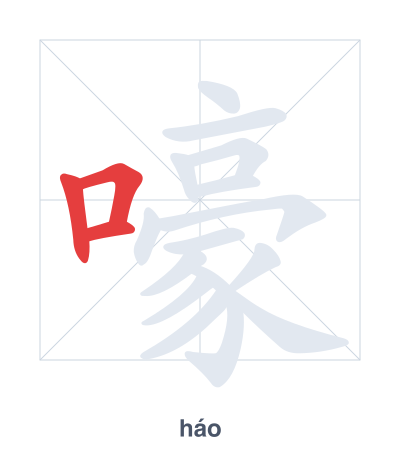
Stroke order practice for 嚎 - háo

Practice Writing 嚎 (háo)

Open Hanzi Writer to see the animated stroke order and practice writing 嚎 with real-time feedback.

The character (háo) is written with 17 strokes. Follow the standard Chinese stroke order: top to bottom, left to right, outside before inside. The radical is one of its key components.

Practice the correct stroke order with the Hanzi Writer app to see animated stroke-by-stroke guidance with real-time feedback.

means To howl / To wail.

Character
Pinyinháo (hao)
MeaningTo howl / To wail
Strokes17
Radical
Difficulty4.2/5

嚎 combines the mouth radical (口) with the phonetic component 豪 (háo, meaning 'grand' or 'heroic'), indicating a loud, full-throated sound made by the mouth. The character depicts a howl or wail as an intense vocal expression, with 豪 lending both sound and the sense of a powerful, unrestrained outburst.

💡 Memory Tip: Imagine a wolf with a big mouth (口) standing under a roof (亠) beside a pig (豕), howling dramatically at the full moon.

háo jiào
To howl / To yell
háo táo dà kū
To cry loudly / To wail
láng háo
wolf howl

狼在深夜嚎叫。

láng zài shēn yè háo jiào

Wolves howl in the dead of night.

孩子在嚎啕大哭。

hái zi zài háo táo dà kū

The child is wailing loudly.

我听到了狼嚎。

wǒ tīng dào le láng háo

I heard a wolf howling.

Character Pinyin Strokes Radical
(current) háo 17
chuài 15
pēng 15
zhǔ 15
Stroke order practice for 嚎 - háo

Practice Writing 嚎 (háo)

Open Hanzi Writer to see the animated stroke order and practice writing 嚎 with real-time feedback.

✨ Animated stroke order · Handwriting recognition · HSK-graded practice · Free to use

Frequently Asked Questions about 嚎

嚎 is composed of the radical 口 (mouth) on the left, which hints that the meaning involves sound or speaking, and the phonetic component 豪 (háo, meaning "hero" or "grand") on the right, which provides the pronunciation. Together, 嚎 means a loud, powerful sound from the mouth, like a howl or wail.

Characters with Radical 口

Other 17-Stroke Characters