酬 (chóu) means "to reward or repay" in Chinese. It has 13 strokes with the radical 酉, and is HSK Level 7.
Rated 4.2/5 in difficulty (advanced).
Harder than 94% of HSK Level 7 characters.
Appears in 3+ common words including 报酬 (bào chóu), 酬劳 (chóu láo), 应酬 (yìng chóu).
Due to its 13 strokes, Hanzi Writer's error detection shows 酬 requires focused practice — most learners need 10+ attempts for consistent accuracy.
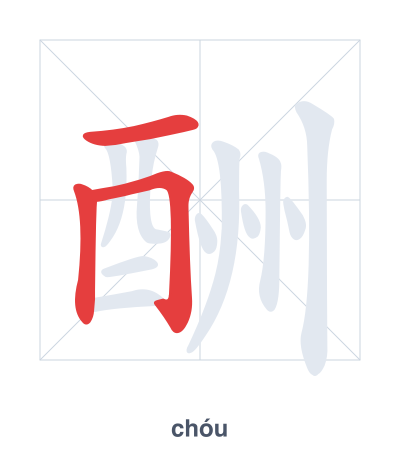
Open Hanzi Writer to see the animated stroke order and practice writing 酬 with real-time feedback.
The character 酬 (chóu) is written with 13 strokes. Follow the standard Chinese stroke order: top to bottom, left to right, outside before inside. The radical 酉 is one of its key components.
Practice the correct stroke order with the Hanzi Writer app to see animated stroke-by-stroke guidance with real-time feedback.
酬 means to reward or repay.
As an HSK Level 7 character, 酬 is an intermediate-level character.
The character 酬 is a phono-semantic compound: the left component 酉 (wine vessel) indicates the original context of toasting with wine, while the right component 州 (ancient phonetic) hints at the sound chóu. Originally it meant 'to offer wine in return' during rituals, later broadening to any form of repayment or reward.
💡 Memory Tip: Picture a host pouring wine (酉) from a bottle with three streams (like the three dots in 州) as a reward for a guest's toast.
他的报酬很高。
tā de bào chóu hěn gāo
His pay is very high.
这是给你的酬劳。
zhè shì gěi nǐ de chóu láo
This is your remuneration.
他今晚有应酬。
tā jīn wǎn yǒu yìng chóu
He has social engagements tonight.
Open Hanzi Writer to see the animated stroke order and practice writing 酬 with real-time feedback.
✨ Animated stroke order · Handwriting recognition · HSK-graded practice · Free to use
The left side is 酉 (yǒu), which represents wine or a wine jar, and the right side is 州 (zhōu), a phonetic component. Wine was often used as a form of payment or reward in ancient China, so the character combines the idea of offering wine as compensation.