酕 (máo) means "very drunk" in Chinese. It has 11 strokes with the radical 酉.
Rated 4.2/5 in difficulty (advanced).
Appears in 3+ common words including 酕醄 (máo táo), 酕醄大醉 (máo táo dà zuì), 醉酕 (zuì máo).
Due to its 11 strokes, Hanzi Writer's error detection shows 酕 requires focused practice — most learners need 10+ attempts for consistent accuracy.
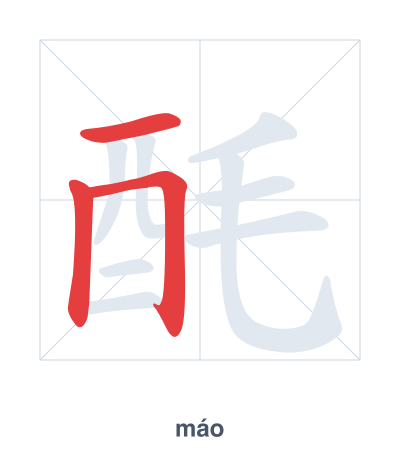
Open Hanzi Writer to see the animated stroke order and practice writing 酕 with real-time feedback.
The character 酕 (máo) is written with 11 strokes. Follow the standard Chinese stroke order: top to bottom, left to right, outside before inside. The radical 酉 is one of its key components.
Practice the correct stroke order with the Hanzi Writer app to see animated stroke-by-stroke guidance with real-time feedback.
酕 means very drunk.
This character is a compound of the radical 酉 (wine jar, symbolizing alcohol) and 毛 (máo, 'hair' or 'fur'), which provides the pronunciation and possibly suggests the disheveled, fuzzy-headed state of extreme drunkenness. Together, 酕 visually conveys being so drunk that even one's hair seems wild and out of control.
💡 Memory Tip: Picture a drunk person with messy hair (毛) clinging to a giant wine jar (酉) — they're so '酕' (mao) that they can't even stand straight.
他喝得酕醄大醉。
tā hē dé máo táo dà zuì
He was dead drunk.
昨晚他酕醄大醉。
zuó wǎn tā máo táo dà zuì
He was dead drunk last night.
诗人醉酕在月下。
shī rén zuì máo zài yuè xià
The poet was dead drunk under the moon.
Open Hanzi Writer to see the animated stroke order and practice writing 酕 with real-time feedback.
✨ Animated stroke order · Handwriting recognition · HSK-graded practice · Free to use
The left part is 酉, the radical for alcohol or wine, indicating the character relates to drinking. The right part is 毛, which gives the pronunciation máo and can suggest messy hair or a disheveled state, matching the idea of being very drunk.