跋 (bá) means "to trek; postscript" in Chinese. It has 12 strokes with the radical 足.
Rated 4.2/5 in difficulty (advanced).
Appears in 3+ common words including 跋涉 (bá shè), 跋文 (bá wén), 序跋 (xù bá).
Due to its 12 strokes, Hanzi Writer's error detection shows 跋 requires focused practice — most learners need 10+ attempts for consistent accuracy.
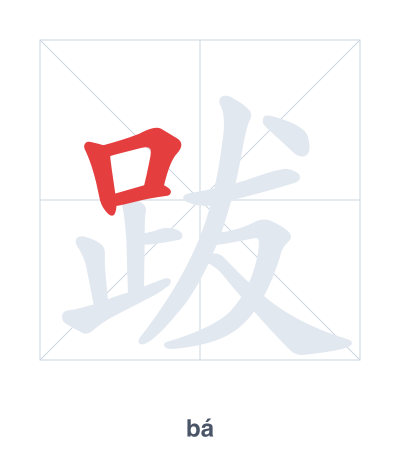
Open Hanzi Writer to see the animated stroke order and practice writing 跋 with real-time feedback.
The character 跋 (bá) is written with 12 strokes. Follow the standard Chinese stroke order: top to bottom, left to right, outside before inside. The radical 足 is one of its key components.
Practice the correct stroke order with the Hanzi Writer app to see animated stroke-by-stroke guidance with real-time feedback.
跋 means to trek; postscript.
The character 跋 combines the foot radical 足 (foot/step) with the phonetic component 犮 (bá), which originally depicted a dog pulling against a restraint. Together, they evoke the image of struggling to walk or push forward, giving the meaning 'to trek.' The postscript sense comes from a metaphorical 'step after' the main text, like an afterword added at the end.
💡 Memory Tip: Imagine your foot (足) tied to a stubborn dog (犮) that drags you on a long, exhausting trek, then sits down to write a postscript about your journey.
他们长途跋涉来到这。
tā men cháng tú bá shè lái dào zhè
They traveled a long distance to get here.
这本书有一篇跋文。
zhè běn shū yǒu yī piān bá wén
This book has a postscript.
读书要看序跋。
dú shū yào kàn xù bá
One should read the preface and postscript when reading a book.
Open Hanzi Writer to see the animated stroke order and practice writing 跋 with real-time feedback.
✨ Animated stroke order · Handwriting recognition · HSK-graded practice · Free to use
The character 跋 is left-right structured. The left radical 足 means "foot," and the right component 犮 provides the pronunciation bá and also suggests the idea of pulling or moving. Together, they convey the meaning of traveling on foot, hence "to trek."