Hanzi Writer

How to Write 趾 (zhǐ) — Meaning “toe”

zhǐ 11 strokes Radical: 足

趾 (zhǐ) means "toe" in Chinese. It has 11 strokes with the radical 足.

Rated 4.2/5 in difficulty (advanced).

Appears in 3+ common words including 脚趾 (jiǎo zhǐ), 趾甲 (zhǐ jiǎ), 趾骨 (zhǐ gǔ).

Due to its 11 strokes, Hanzi Writer's error detection shows 趾 requires focused practice — most learners need 10+ attempts for consistent accuracy.
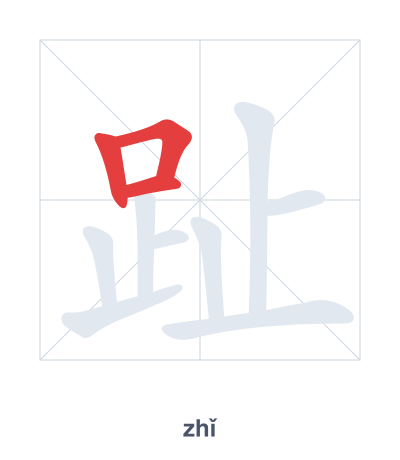
Stroke order practice for 趾 - zhǐ

Practice Writing 趾 (zhǐ)

Open Hanzi Writer to see the animated stroke order and practice writing 趾 with real-time feedback.

The character (zhǐ) is written with 11 strokes. Follow the standard Chinese stroke order: top to bottom, left to right, outside before inside. The radical is one of its key components.

Practice the correct stroke order with the Hanzi Writer app to see animated stroke-by-stroke guidance with real-time feedback.

means toe.

Character
Pinyinzhǐ (zhi)
Meaningtoe
Strokes11
Radical
Difficulty4.2/5

趾 is a compound character combining the radical 足 (foot) with 止 (to stop/step). The 止 component provides both a phonetic hint (pronounced similar to zhǐ) and semantic nuance of stepping, so the character literally means 'the part of the foot that contacts the ground'—the toe.

💡 Memory Tip: Imagine a giant foot (足) with a little sign saying 'STOP' (止) right on the tip of your big toe.

jiǎo zhǐ
toe
zhǐ jiǎ
toenail
zhǐ gǔ
phalanx (toe bone)

他的脚趾受伤了。

tā de jiǎo zhǐ shòu shāng le

His toe is injured.

妹妹在剪脚趾甲。

mèi mèi zài jiǎn jiǎo zhǐ jiǎ

My younger sister is cutting her toenails.

医学生在观察趾骨。

yī xué shēng zài guān chá zhǐ gǔ

The medical student is observing the phalanges (toe bones).

Character Pinyin Strokes Radical
(current) zhǐ 11
9
bào 10
dǔn 10
Stroke order practice for 趾 - zhǐ

Practice Writing 趾 (zhǐ)

Open Hanzi Writer to see the animated stroke order and practice writing 趾 with real-time feedback.

✨ Animated stroke order · Handwriting recognition · HSK-graded practice · Free to use

Frequently Asked Questions about 趾

The character 趾 consists of the radical 足 (foot) on the left, which indicates its connection to the foot, and the phonetic component 止 (zhǐ) on the right, which suggests the pronunciation. Together, 足 places the meaning in the foot area, and 趾 specifically refers to the toe.

Characters with Radical 足

Other 11-Stroke Characters