How to Write 滞 (zhì) — Meaning “stagnant; sluggish; delayed”
zhì
HSK Level 7
12 strokes
Radical: 氵
滞 (zhì) means "stagnant; sluggish; delayed" in Chinese. It has 12 strokes with the radical 氵, and is HSK Level 7.
Rated 4.2/5 in difficulty (advanced).
Harder than 68% of HSK Level 7 characters.
Appears in 3+ common words including 滞留 (zhì liú), 停滞 (tíng zhì), 滞销 (zhì xiāo).
Due to its 12 strokes, Hanzi Writer's error detection shows 滞 requires focused practice — most learners need 10+ attempts for consistent accuracy.
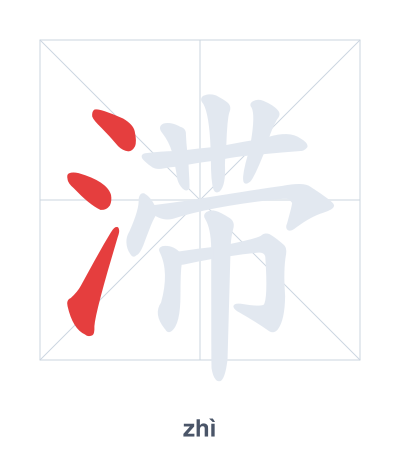
Practice Writing 滞 (zhì)
Open Hanzi Writer to see the animated stroke order and practice writing 滞 with real-time feedback.