Hanzi Writer

How to Write 堰 (yàn)

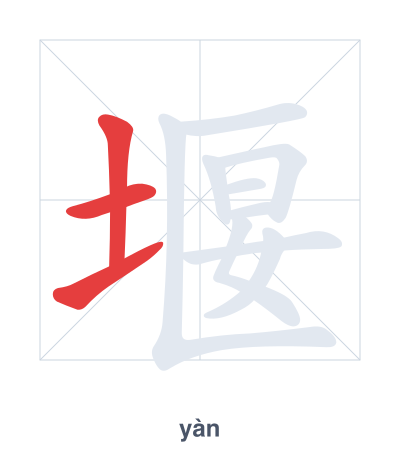
堰 (yàn) means "weir / dam" in Chinese. It has 12 strokes with the radical 土. Difficulty: 4.2/5.

yàn
12 strokes Radical: 土 Difficulty: 4.2/5

weir / dam

How to Write 堰

The character (yàn) is written with 12 strokes. Follow the standard Chinese stroke order: top to bottom, left to right, outside before inside. The radical is one of its key components.

Practice the correct stroke order with the Hanzi Writer app to see animated stroke-by-stroke guidance with real-time feedback.

Meaning & Pronunciation

is pronounced yàn in Mandarin Chinese. It means weir / dam.

Common Words with 堰

都江堰 dū jiāng yàn
Dujiangyan (an ancient irrigation system)
石堰 shí yàn
stone weir
堤堰 dī yàn
weir / dike / embankment

Example Sentences

我去过都江堰旅游。

wǒ qù guò dū jiāng yàn lǚ yóu

I have been to Dujiangyan for a trip.

这里的石堰很古老。

zhè lǐ de shí yàn hěn gǔ lǎo

The stone weir here is very old.

农民们修好了堤堰。

nóng mín men xiū hǎo le dī yàn

The farmers repaired the embankment.

Similar Characters

yuàn
gěng
āi
Stroke order practice for 堰 - yàn

Practice Writing 堰 (yàn)

Open Hanzi Writer to see the animated stroke order and practice writing 堰 with real-time feedback.

Frequently Asked Questions about 堰

Related Characters