酩 (mǐng) means "tipsy or drunk" in Chinese. It has 13 strokes with the radical 酉.
Rated 4.2/5 in difficulty (advanced).
Appears in 3+ common words including 酩酊 (mǐng dǐng), 酩酊大醉 (mǐng dǐng dà zuì), 酩酊而归 (mǐng dǐng ér guī).
Due to its 13 strokes, Hanzi Writer's error detection shows 酩 requires focused practice — most learners need 10+ attempts for consistent accuracy.
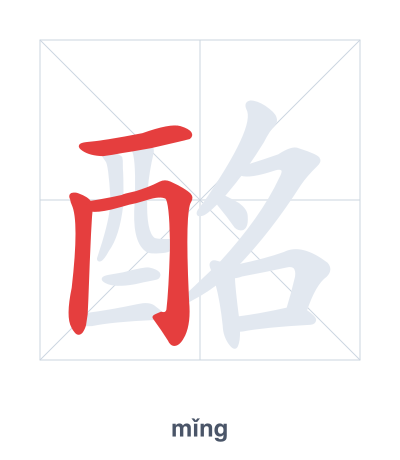
Open Hanzi Writer to see the animated stroke order and practice writing 酩 with real-time feedback.
The character 酩 (mǐng) is written with 13 strokes. Follow the standard Chinese stroke order: top to bottom, left to right, outside before inside. The radical 酉 is one of its key components.
Practice the correct stroke order with the Hanzi Writer app to see animated stroke-by-stroke guidance with real-time feedback.
酩 means tipsy or drunk.
酩 is a compound character combining the wine radical 酉 (a wine jar) with 名 (míng, meaning 'name' or 'fame') as a phonetic component. Together, they suggest a state of drunkenness associated with wine, as in the word 酩酊 (mǐngdǐng), meaning thoroughly drunk.
💡 Memory Tip: Picture a famous celebrity (名) chugging a whole wine jar (酉) and stumbling around tipsy.
他喝得酩酊大醉。
tā hē dé mǐng dǐng dà zuì
He was hopelessly drunk.
哥哥酩酊大醉了。
gē gē mǐng dǐng dà zuì le
Older brother is dead drunk.
昨晚他酩酊而归。
zuó wǎn tā mǐng dǐng ér guī
He came back drunk last night.
Open Hanzi Writer to see the animated stroke order and practice writing 酩 with real-time feedback.
✨ Animated stroke order · Handwriting recognition · HSK-graded practice · Free to use
The left component is 酉, which represents a wine jug or alcohol. The right component is 名, meaning "name" or "fame," but here it mainly provides pronunciation (mǐng). Together, the character suggests being under the influence of alcohol, hence "tipsy or drunk."