Hanzi Writer

How to Write 掳 (lǔ)

掳 (lǔ) means "to capture; to seize; to kidnap" in Chinese. It has 11 strokes with the radical 扌. Difficulty: 4.2/5.

11 strokes Radical: 扌 Difficulty: 4.2/5

to capture; to seize; to kidnap

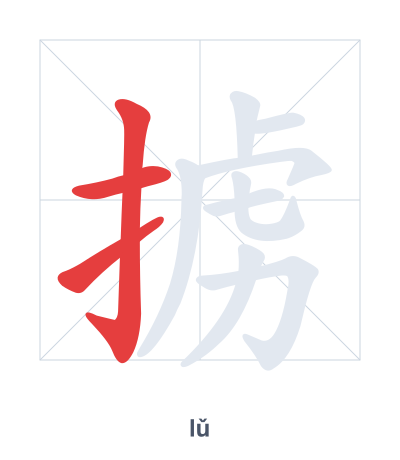
How to Write 掳

The character (lǔ) is written with 11 strokes. Follow the standard Chinese stroke order: top to bottom, left to right, outside before inside. The radical is one of its key components.

Practice the correct stroke order with the Hanzi Writer app to see animated stroke-by-stroke guidance with real-time feedback.

Meaning & Pronunciation

is pronounced in Mandarin Chinese. It means to capture; to seize; to kidnap.

Common Words with 掳

掳走 lǔ zǒu
to carry off; to kidnap
掳掠 lǔ lüè
to loot; to pillage; to plunder
掳人 lǔ rén
to kidnap people

Example Sentences

坏人掳走了钱。

huài rén lǔ zǒu le qián

The bad guy made off with the money.

战争中有很多掳掠。

zhàn zhēng zhōng yǒu hěn duō lǔ lüè

There was much looting during the war.

绑匪在掳人。

bǎng fěi zài lǔ rén

The kidnappers are abducting someone.

Similar Characters

bài
kuò
shì
Stroke order practice for 掳 - lǔ

Practice Writing 掳 (lǔ)

Open Hanzi Writer to see the animated stroke order and practice writing 掳 with real-time feedback.

Frequently Asked Questions about 掳

Related Characters