谰 (lán) means "to slander; to falsely accuse" in Chinese. It has 14 strokes with the radical 讠.
Rated 3.9/5 in difficulty (challenging).
Appears in 3+ common words including 谰言 (lán yán), 诋谰 (dǐ lán), 贪谰 (tān lán).
Due to its 14 strokes, Hanzi Writer's error detection shows 谰 requires focused practice — most learners need 10+ attempts for consistent accuracy.
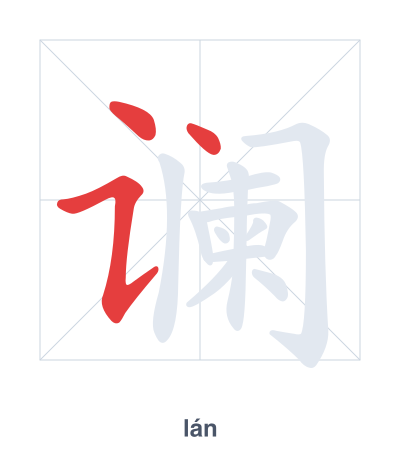
Open Hanzi Writer to see the animated stroke order and practice writing 谰 with real-time feedback.
The character 谰 (lán) is written with 14 strokes. Follow the standard Chinese stroke order: top to bottom, left to right, outside before inside. The radical 讠 is one of its key components.
Practice the correct stroke order with the Hanzi Writer app to see animated stroke-by-stroke guidance with real-time feedback.
谰 means to slander; to falsely accuse.
谰 is a phono-semantic compound. The radical 讠 (speech) indicates that the word relates to spoken words, while 阑 (lán, meaning 'gate' or 'railing') provides the pronunciation and subtly suggests the idea of blocking or obstructing truth. Thus, the character depicts speech that obstructs the truth—i.e., slander or false accusation.
💡 Memory Tip: Picture a person standing at a gate (阑) and speaking (讠) vicious lies to slander everyone who tries to pass through.
这些话全是谰言。
zhè xiē huà quán shì lán yán
These words are all slanders.
他在恶意诋谰别人。
tā zài è yì dǐ lán bié rén
He is maliciously slandering others.
这个人非常贪谰。
zhè ge rén fēi cháng tān lán
This person is extremely greedy.
Open Hanzi Writer to see the animated stroke order and practice writing 谰 with real-time feedback.
✨ Animated stroke order · Handwriting recognition · HSK-graded practice · Free to use
谰 is composed of the radical 讠 (speech) on the left and the component 阑 on the right. 讠 indicates that the character relates to spoken or written words, while 阑 provides the pronunciation lán and also suggests the idea of blocking or hindering truth. Together, they create the meaning of using speech to falsely accuse or slander someone.