讧 (hòng) means "Internal strife" in Chinese. It has 5 strokes with the radical 讠.
Rated 2.7/5 in difficulty (moderate).
Appears in 3+ common words including 内讧 (nèi hòng), 讧乱 (hòng luàn), 讧争 (hòng zhēng).
Hanzi Writer's stroke validation shows learners typically need 5-8 attempts to write 讧 with correct proportion and order.
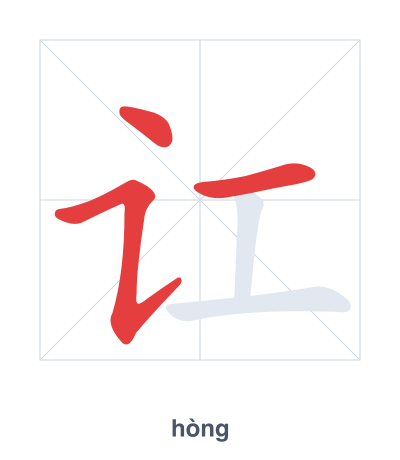
Open Hanzi Writer to see the animated stroke order and practice writing 讧 with real-time feedback.
The character 讧 (hòng) is written with 5 strokes. Follow the standard Chinese stroke order: top to bottom, left to right, outside before inside. The radical 讠 is one of its key components.
Practice the correct stroke order with the Hanzi Writer app to see animated stroke-by-stroke guidance with real-time feedback.
讧 means Internal strife.
This compound character combines the radical 讠 (speech) with the phonetic component 工 (work, gōng). The speech radical indicates that the meaning involves words or disputes, and the whole character represents internal conflict arising from arguments or discord within a group.
💡 Memory Tip: Picture two workers (工) shouting angry words (讠) at each other, creating internal strife in the workplace.
那个公司发生了内讧。
nà ge gōng sī fā shēng le nèi hòng
That company had internal strife.
战争引起了讧乱。
zhàn zhēng yǐn qǐ le hòng luàn
The war caused internal strife.
内部讧争很严重。
nèi bù hòng zhēng hěn yán zhòng
The internal strife is very serious.
Open Hanzi Writer to see the animated stroke order and practice writing 讧 with real-time feedback.
✨ Animated stroke order · Handwriting recognition · HSK-graded practice · Free to use
讧 has two parts: the radical 讠 on the left, which means 'speech' or 'words', and 工 on the right, which is a phonetic component. The 'speech' radical suggests the character is related to verbal conflict, which matches its meaning of 'internal strife' or 'infighting'. So 讧 literally conveys the idea of conflict expressed through words.