馑 (jǐn) means "famine" in Chinese. It has 14 strokes with the radical 饣.
Rated 4.2/5 in difficulty (advanced).
Appears in 3+ common words including 饥馑 (jī jǐn), 馑荒 (jǐn huāng), 灾馑 (zāi jǐn).
Due to its 14 strokes, Hanzi Writer's error detection shows 馑 requires focused practice — most learners need 10+ attempts for consistent accuracy.
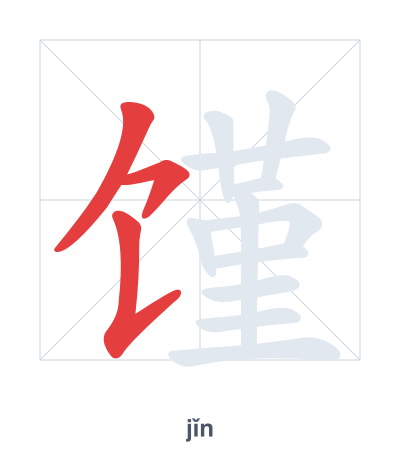
Open Hanzi Writer to see the animated stroke order and practice writing 馑 with real-time feedback.
The character 馑 (jǐn) is written with 14 strokes. Follow the standard Chinese stroke order: top to bottom, left to right, outside before inside. The radical 饣 is one of its key components.
Practice the correct stroke order with the Hanzi Writer app to see animated stroke-by-stroke guidance with real-time feedback.
馑 means famine.
馑 is a phono-semantic compound. The left radical 饣 (food) indicates the meaning of famine or food shortage. The right component 堇 (jǐn) provides the pronunciation and originally depicted a person bound or in distress, reinforcing the concept of scarcity and hardship.
💡 Memory Tip: Imagine a food container (饣) with only a dried-up, withered plant (堇) inside—there's nothing left to eat, signaling a famine.
那个地方有饥馑。
nà ge dì fāng yǒu jī jǐn
There is a famine in that place.
以前常有馑荒。
yǐ qián cháng yǒu jǐn huāng
There used to be frequent famines.
农民害怕灾馑。
nóng mín hài pà zāi jǐn
Farmers fear famine.
Open Hanzi Writer to see the animated stroke order and practice writing 馑 with real-time feedback.
✨ Animated stroke order · Handwriting recognition · HSK-graded practice · Free to use
馑 is made of two parts: the left side 饣 (food radical) and the right side 堇 (jǐn, meaning clay or famine in ancient contexts). The food radical suggests a connection to eating or food, while the right side hints at scarcity or hardship, together indicating a lack of food. This structure reflects the character's core idea of famine or severe food shortage.