饩 (xì) means "sacrificial food; grain given as a gift" in Chinese. It has 7 strokes with the radical 饣.
Rated 3.5/5 in difficulty (challenging).
Appears in 3+ common words including 廪饩 (lǐn xì), 饩牵 (xì qiān), 饩羊 (xì yáng).
Due to its 7 strokes, Hanzi Writer's error detection shows 饩 requires focused practice — most learners need 10+ attempts for consistent accuracy.
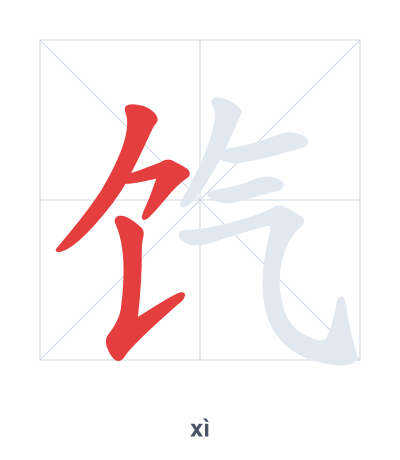
Open Hanzi Writer to see the animated stroke order and practice writing 饩 with real-time feedback.
The character 饩 (xì) is written with 7 strokes. Follow the standard Chinese stroke order: top to bottom, left to right, outside before inside. The radical 饣 is one of its key components.
Practice the correct stroke order with the Hanzi Writer app to see animated stroke-by-stroke guidance with real-time feedback.
饩 means sacrificial food; grain given as a gift.
饩 combines the radical 饣 (food) with 气, which originally depicted steam rising from cooked grain. In ancient China, this character specifically referred to raw grain or sacrificial food offered in rituals, where the steam symbolized the essence of the offering.
💡 Memory Tip: Picture a steaming bowl of grain (饣) with aromatic steam (气) swirling upwards—this is the sacred gift for the gods.
古代学生有廪饩。
gǔ dài xué shēng yǒu lǐn xì
Ancient students received government food stipends.
祭祀需要饩牵。
jì sì xū yào xì qiān
Sacrificial livestock is required for the sacrifice.
告朔之饩羊。
gào shuò zhī xì yáng
The sacrificial sheep for the announcement of the new moon.
Open Hanzi Writer to see the animated stroke order and practice writing 饩 with real-time feedback.
✨ Animated stroke order · Handwriting recognition · HSK-graded practice · Free to use
The left side is 饣, a radical meaning 'food' or 'to eat'. The right side is 气, which gives the pronunciation xì and also suggests the idea of vapor or breath, connecting to the steam of sacrificial offerings. Together, the character refers to food that is given as a gift or used in rituals.