饬 (chì) means "to order; to command; to put in order" in Chinese. It has 7 strokes with the radical 饣.
Rated 3.5/5 in difficulty (challenging).
Appears in 3+ common words including 整饬 (zhěng chì), 申饬 (shēn chì), 严饬 (yán chì).
Due to its 7 strokes, Hanzi Writer's error detection shows 饬 requires focused practice — most learners need 10+ attempts for consistent accuracy.
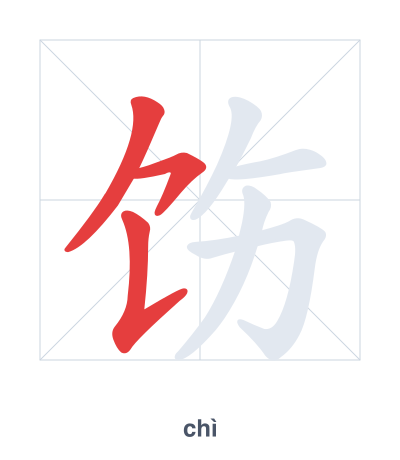
Open Hanzi Writer to see the animated stroke order and practice writing 饬 with real-time feedback.
The character 饬 (chì) is written with 7 strokes. Follow the standard Chinese stroke order: top to bottom, left to right, outside before inside. The radical 饣 is one of its key components.
Practice the correct stroke order with the Hanzi Writer app to see animated stroke-by-stroke guidance with real-time feedback.
饬 means to order; to command; to put in order.
饬 combines the food radical 饣 (simplified from 食) with 敕, which itself means 'to order' or 'to command'. Originally it referred to putting food in proper order, later extending to general commands and arrangements.
💡 Memory Tip: Picture a chef (饣) shouting orders (敕) to line up dishes perfectly.
纪律需要整饬。
jì lǜ xū yào zhěng chì
Discipline needs to be tightened.
他受到了申饬。
tā shòu dào le shēn chì
He was reprimanded.
老师严饬学生。
lǎo shī yán chì xué shēng
The teacher strictly disciplined the students.
Open Hanzi Writer to see the animated stroke order and practice writing 饬 with real-time feedback.
✨ Animated stroke order · Handwriting recognition · HSK-graded practice · Free to use
饬 is composed of the radical 饣 (food) on the left and the phonetic component 敕 (chì, an order or command) on the right. The food radical suggests that the character originally related to organizing or preparing meals, which extended to the general sense of putting things in order. The right part provides the pronunciation and reinforces the idea of a command.