Hanzi Writer

How to Write 敢 (gǎn)

敢 (gǎn) means "to dare" in Chinese. It has 11 strokes with the radical 攵, and is HSK Level 3. Difficulty: 4.2/5.

gǎn
HSK Level 3 11 strokes Radical: 攵 Difficulty: 4.2/5

to dare

How to Write 敢

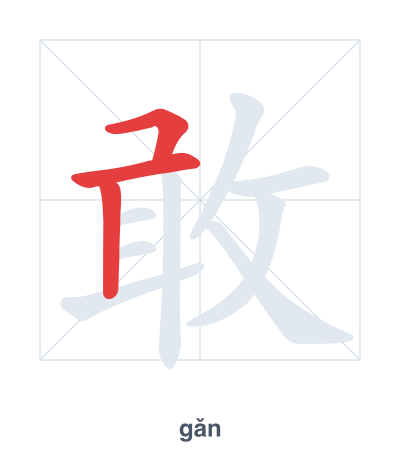
The character (gǎn) is written with 11 strokes. Follow the standard Chinese stroke order: top to bottom, left to right, outside before inside. The radical is one of its key components.

Practice the correct stroke order with the Hanzi Writer app to see animated stroke-by-stroke guidance with real-time feedback.

Meaning & Pronunciation

is pronounced gǎn in Mandarin Chinese. It means to dare.

As an HSK Level 3 character, is an intermediate-level character.

Common Words with 敢

勇敢 yǒng gǎn
Brave; courageous
敢于 gǎn yú
to dare to / to have the courage to
不敢 bù gǎn
dare not

Example Sentences

他是一个勇敢的孩子。

tā shì yí gè yǒng gǎn de hái zi

He is a brave child.

他敢于面对困难。

tā gǎn yú miàn duì kùn nán

He dared to face difficulties.

我不敢一个人睡觉。

wǒ bù gǎn yí gè rén shuì jiào

I'm afraid to sleep alone.

Similar Characters

zhèng
mǐn
Stroke order practice for 敢 - gǎn

Practice Writing 敢 (gǎn)

Open Hanzi Writer to see the animated stroke order and practice writing 敢 with real-time feedback.

Frequently Asked Questions about 敢

Related Characters