酲 (chéng) means "hangover" in Chinese. It has 14 strokes with the radical 酉.
Rated 4.2/5 in difficulty (advanced).
Appears in 3+ common words including 宿酲 (sù chéng), 酲解 (chéng jiě), 忧酲 (yōu chéng).
Due to its 14 strokes, Hanzi Writer's error detection shows 酲 requires focused practice — most learners need 10+ attempts for consistent accuracy.
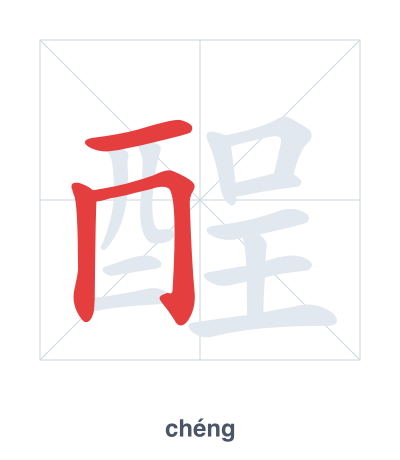
Open Hanzi Writer to see the animated stroke order and practice writing 酲 with real-time feedback.
The character 酲 (chéng) is written with 14 strokes. Follow the standard Chinese stroke order: top to bottom, left to right, outside before inside. The radical 酉 is one of its key components.
Practice the correct stroke order with the Hanzi Writer app to see animated stroke-by-stroke guidance with real-time feedback.
酲 means hangover.
酲 is a phono-semantic compound: 酉 (wine jar) suggests alcohol, and 呈 (chéng) contributes the sound. The character captures the idea of a hangover—the unpleasant aftereffect of drinking too much wine.
💡 Memory Tip: The wine jar (酉) presents (呈) a king (王) with a mouth (口) groaning from a splitting hangover.
他还没解掉宿酲。
tā hái méi jiě diào sù chéng
He hasn't recovered from his hangover yet.
喝茶可以酲解。
hē chá kě yǐ chéng jiě
Drinking tea can help one sober up.
他满脸忧酲。
tā mǎn liǎn yōu chéng
His face was full of sorrow and distress.
Open Hanzi Writer to see the animated stroke order and practice writing 酲 with real-time feedback.
✨ Animated stroke order · Handwriting recognition · HSK-graded practice · Free to use
酲 is made of the radical 酉 (wine) on the left and the phonetic component 呈 (chéng) on the right. The wine radical indicates a connection to drinking, while 呈 suggests the idea of 'presenting' or 'appearing' — together they mean the state that appears after drinking too much wine: a hangover.