弊 (bì) means "fraud, harm, or disadvantage" in Chinese. It has 14 strokes with the radical 廾, and is HSK Level 7.
Rated 3.8/5 in difficulty (challenging).
Harder than 32% of HSK Level 7 characters.
Appears in 3+ common words including 利弊 (lì bì), 弊端 (bì duān), 作弊 (zuò bì).
Due to its 14 strokes, Hanzi Writer's error detection shows 弊 requires focused practice — most learners need 10+ attempts for consistent accuracy.
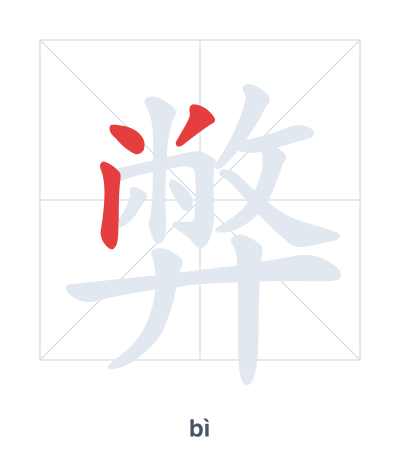
Open Hanzi Writer to see the animated stroke order and practice writing 弊 with real-time feedback.
The character 弊 (bì) is written with 14 strokes. Follow the standard Chinese stroke order: top to bottom, left to right, outside before inside. The radical 廾 is one of its key components.
Practice the correct stroke order with the Hanzi Writer app to see animated stroke-by-stroke guidance with real-time feedback.
弊 means fraud, harm, or disadvantage.
As an HSK Level 7 character, 弊 is an intermediate-level character.
The character 弊 combines 敝 (shabby, worn-out) and 廾 (two hands holding). 敝 itself shows a hand striking cloth (巾) with a stick (攴), creating tears and damage. The hands emphasize handling a damaged item, which extends to the concepts of fraud (using flawed goods) and harm (the resulting disadvantage).
💡 Memory Tip: Picture two hands (廾) offering a torn, shabby cloth (敝) in a shady deal—this flawed item brings only fraud and harm to the buyer.
这件事有利也有弊。
zhè jiàn shì yǒu lì yě yǒu bì
This matter has both pros and cons.
我们要发现制度的弊端。
wǒ men yào fā xiàn zhì dù de bì duān
We should identify the flaws in the system.
考试绝对不能作弊。
kǎo shì jué duì bù néng zuò bì
You must never cheat on an exam.
Open Hanzi Writer to see the animated stroke order and practice writing 弊 with real-time feedback.
✨ Animated stroke order · Handwriting recognition · HSK-graded practice · Free to use
The character 弊 is composed of the radical 廾 (two hands) on the bottom, and the top part is 敝 (bì) which means 'shabby' or 'to break'. Together, the structure suggests 'breaking something with two hands to cause harm or disadvantage.' This visually links the components to the character's meanings of fraud, harm, or disadvantage.