缢 (yì) means "to hang; to strangle" in Chinese. It has 13 strokes with the radical 纟.
Rated 4.2/5 in difficulty (advanced).
Appears in 3+ common words including 自缢 (zì yì), 缢死 (yì sǐ), 缢杀 (yì shā).
Due to its 13 strokes, Hanzi Writer's error detection shows 缢 requires focused practice — most learners need 10+ attempts for consistent accuracy.
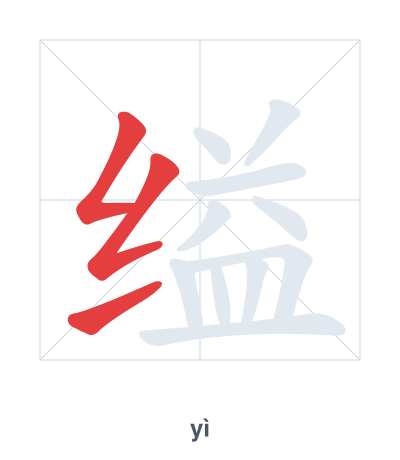
Open Hanzi Writer to see the animated stroke order and practice writing 缢 with real-time feedback.
The character 缢 (yì) is written with 13 strokes. Follow the standard Chinese stroke order: top to bottom, left to right, outside before inside. The radical 纟 is one of its key components.
Practice the correct stroke order with the Hanzi Writer app to see animated stroke-by-stroke guidance with real-time feedback.
缢 means to hang; to strangle.
缢 is a phono-semantic compound: the left side 纟 (silk thread) suggests a rope or cord used for hanging or strangling, while the right side 益 (yì) provides the pronunciation and originally meant 'to overflow' or 'benefit'—a grim twist where 'benefit' becomes lethal.
💡 Memory Tip: Imagine a silk thread (纟) tightening around a neck, turning the 'benefit' (益) of life into death by hanging.
他选择自缢。
tā xuǎn zé zì yì
He chose to hang himself.
这种动物被缢死了。
zhè zhǒng dòng wù bèi yì sǐ le
This animal was strangled to death.
坏人被缢杀了。
huài rén bèi yì shā le
The villain was hanged.
Open Hanzi Writer to see the animated stroke order and practice writing 缢 with real-time feedback.
✨ Animated stroke order · Handwriting recognition · HSK-graded practice · Free to use
The character 缢 combines the radical 纟 (silk thread) on the left with 益 (yì, meaning 'benefit' or 'increase') on the right. The silk radical suggests the use of a cord or rope, which relates to hanging or strangling. The right part gives the pronunciation hint, while the overall structure points to the action involving a rope.