Hanzi Writer

How to Write 谒 (yè) — Meaning “to pay a formal visit”

11 strokes Radical: 讠

谒 (yè) means "to pay a formal visit" in Chinese. It has 11 strokes with the radical 讠.

Rated 3.9/5 in difficulty (challenging).

Appears in 3+ common words including 拜谒 (bài yè), 谒见 (yè jiàn), 瞻谒 (zhān yè).

Due to its 11 strokes, Hanzi Writer's error detection shows 谒 requires focused practice — most learners need 10+ attempts for consistent accuracy.
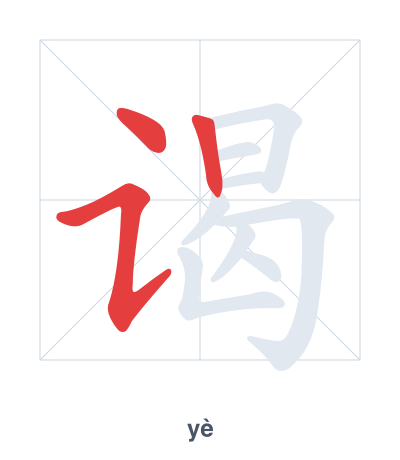
Stroke order practice for 谒 - yè

Practice Writing 谒 (yè)

Open Hanzi Writer to see the animated stroke order and practice writing 谒 with real-time feedback.

The character (yè) is written with 11 strokes. Follow the standard Chinese stroke order: top to bottom, left to right, outside before inside. The radical is one of its key components.

Practice the correct stroke order with the Hanzi Writer app to see animated stroke-by-stroke guidance with real-time feedback.

means to pay a formal visit.

Character
Pinyinyè (ye)
Meaningto pay a formal visit
Strokes11
Radical
Difficulty3.9/5

谒 is a phono-semantic compound. The radical 讠 (speech) indicates the act of speaking during a formal visit. The right component 曷 provides the pronunciation yè and also carries the sense of 'to inquire' or 'ask', as formal visits often involve respectful questions.

💡 Memory Tip: When you pay a formal visit (谒), you speak (讠) respectfully and ask 'why' (曷) you are there.

bài yè
To pay one's respects
yè jiàn
to have a formal audience with
zhān yè
to pay a visit to a monument or tomb with respect

他们去拜谒了老师。

tā men qù bài yè le lǎo shī

They went to pay their respects to the teacher.

他请求谒见校长。

tā qǐng qiú yè jiàn xiào zhǎng

He requested an audience with the principal.

游客们去瞻谒古迹。

yóu kè men qù zhān yè gǔ jì

Tourists go to visit historic sites.

Character Pinyin Strokes Radical
(current) 11
jiè 9
9
9
Stroke order practice for 谒 - yè

Practice Writing 谒 (yè)

Open Hanzi Writer to see the animated stroke order and practice writing 谒 with real-time feedback.

✨ Animated stroke order · Handwriting recognition · HSK-graded practice · Free to use

Frequently Asked Questions about 谒

The left component is 讠, the speech radical, indicating that the character relates to speaking or language. The right component is 曷 (hé), which provides the pronunciation and originally meant "to ask" or "to stop." Together, they suggest using speech to pay a formal visit, such as requesting an audience.

Characters with Radical 讠

Other 11-Stroke Characters