Hanzi Writer

How to Write 恙 (yàng) — Meaning “ailment”

yàng 10 strokes Radical: 心

恙 (yàng) means "ailment" in Chinese. It has 10 strokes with the radical 心.

Rated 4.2/5 in difficulty (advanced).

Appears in 3+ common words including 无恙 (wú yàng), 别来无恙 (bié lái wú yàng), 微恙 (wēi yàng).

Due to its 10 strokes, Hanzi Writer's error detection shows 恙 requires focused practice — most learners need 10+ attempts for consistent accuracy.
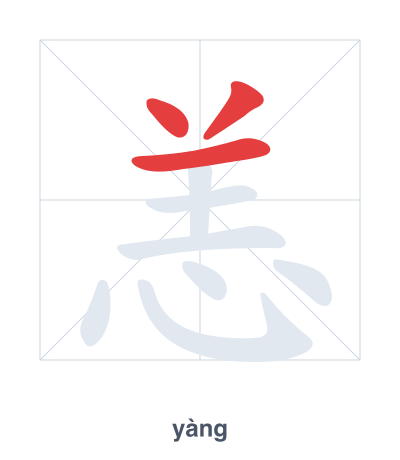
Stroke order practice for 恙 - yàng

Practice Writing 恙 (yàng)

Open Hanzi Writer to see the animated stroke order and practice writing 恙 with real-time feedback.

The character (yàng) is written with 10 strokes. Follow the standard Chinese stroke order: top to bottom, left to right, outside before inside. The radical is one of its key components.

Practice the correct stroke order with the Hanzi Writer app to see animated stroke-by-stroke guidance with real-time feedback.

means ailment.

Character
Pinyinyàng (yang)
Meaningailment
Strokes10
Radical
Difficulty4.2/5

This compound character combines 羊 (sheep) as a phonetic component with 心 (heart) as the meaning radical. Ancient Chinese believed that a worried heart could cause sickness, so 恙 originally meant 'anxiety' or 'illness'—a troubling feeling in the heart.

💡 Memory Tip: Picture a sheep (羊) clutching its heart (心) and coughing—the poor thing has an ailment.

wú yàng
Safe and sound; in good health.
bié lái wú yàng
I hope you have been well since we last met.
wēi yàng
slight illness; indisposition

幸好身体无恙。

xìng hǎo shēn tǐ wú yàng

Luckily, I'm safe and sound.

老朋友,别来无恙啊。

lǎo péng yǒu bié lái wú yàng a

Old friend, I hope you have been well.

他近日偶感微恙。

tā jìn rì ǒu gǎn wēi yàng

He has been feeling slightly unwell lately.

Character Pinyin Strokes Radical
(current) yàng 10
tiǎn 8
mín 8
zhōng 8
Stroke order practice for 恙 - yàng

Practice Writing 恙 (yàng)

Open Hanzi Writer to see the animated stroke order and practice writing 恙 with real-time feedback.

✨ Animated stroke order · Handwriting recognition · HSK-graded practice · Free to use

Frequently Asked Questions about 恙

恙 is made of two parts: the top is 羊 (sheep) and the bottom is 心 (heart). The heart component suggests a connection to the body or health, while the sheep gives the character its pronunciation. Together, they form the idea of an ailment or sickness.

Characters with Radical 心

Other 10-Stroke Characters