Hanzi Writer

How to Write 谚 (yàn) — Meaning “proverb; saying”

yàn 11 strokes Radical: 讠

谚 (yàn) means "proverb; saying" in Chinese. It has 11 strokes with the radical 讠.

Rated 3.9/5 in difficulty (challenging).

Appears in 3+ common words including 谚语 (yàn yǔ), 古谚 (gǔ yàn), 农谚 (nóng yàn).

Due to its 11 strokes, Hanzi Writer's error detection shows 谚 requires focused practice — most learners need 10+ attempts for consistent accuracy.
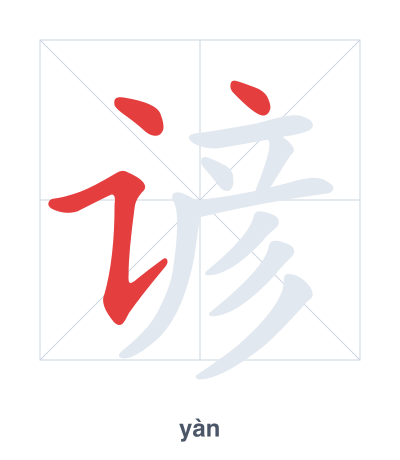
Stroke order practice for 谚 - yàn

Practice Writing 谚 (yàn)

Open Hanzi Writer to see the animated stroke order and practice writing 谚 with real-time feedback.

The character (yàn) is written with 11 strokes. Follow the standard Chinese stroke order: top to bottom, left to right, outside before inside. The radical is one of its key components.

Practice the correct stroke order with the Hanzi Writer app to see animated stroke-by-stroke guidance with real-time feedback.

means proverb; saying.

Character
Pinyinyàn (yan)
Meaningproverb; saying
Strokes11
Radical
Difficulty3.9/5

谚 is a phonetic-semantic compound. The radical 讠 (speech) indicates the meaning relates to spoken words, while 彦 (yàn, originally 'a man of virtue/learning') provides the sound and also hints at wisdom. Together, they form the idea of wise sayings passed down through speech—proverbs.

💡 Memory Tip: Picture a learned scholar (彦) on a stage, speaking (讠) ancient proverbs to a crowd.

yàn yǔ
proverb; adage
gǔ yàn
Ancient proverb
nóng yàn
Agricultural proverbs

这是一句谚语。

zhè shì yī jù yàn yǔ

This is a proverb.

中国有句古谚。

zhōng guó yǒu jù gǔ yàn

There is an ancient Chinese proverb.

农谚很有用。

nóng yàn hěn yǒu yòng

Agricultural proverbs are very useful.

Character Pinyin Strokes Radical
(current) yàn 11
jiè 9
9
9
Stroke order practice for 谚 - yàn

Practice Writing 谚 (yàn)

Open Hanzi Writer to see the animated stroke order and practice writing 谚 with real-time feedback.

✨ Animated stroke order · Handwriting recognition · HSK-graded practice · Free to use

Frequently Asked Questions about 谚

The character 谚 combines the speech radical 讠 on the left with 彦 on the right. The speech radical hints that it relates to spoken words, while 彦 means "elegant" or "talented person," so together they suggest a wise saying or proverb spoken by someone learned.

Characters with Radical 讠

Other 11-Stroke Characters