箫 (xiāo) means "vertical bamboo flute" in Chinese. It has 14 strokes with the radical 竹.
Rated 4.2/5 in difficulty (advanced).
Appears in 3+ common words including 吹箫 (chuī xiāo), 箫声 (xiāo shēng), 洞箫 (dòng xiāo).
Due to its 14 strokes, Hanzi Writer's error detection shows 箫 requires focused practice — most learners need 10+ attempts for consistent accuracy.
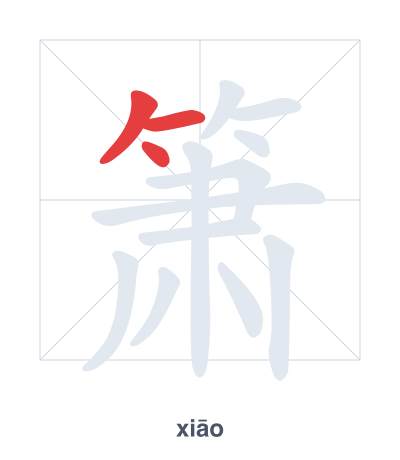
Open Hanzi Writer to see the animated stroke order and practice writing 箫 with real-time feedback.
The character 箫 (xiāo) is written with 14 strokes. Follow the standard Chinese stroke order: top to bottom, left to right, outside before inside. The radical 竹 is one of its key components.
Practice the correct stroke order with the Hanzi Writer app to see animated stroke-by-stroke guidance with real-time feedback.
箫 means vertical bamboo flute.
箫 is a phono-semantic compound: the top radical 竹 (bamboo) indicates the instrument is made from bamboo, while the bottom component 肃 (sù) provides the sound and also suggests the flute's elegant, solemn tone. The ancient form of 竹 resembles a bamboo stalk with leaves, and together with 肃, it depicts a refined bamboo wind instrument.
💡 Memory Tip: Picture a solemn (肃) bamboo (竹) stalk carved into a tall, vertical flute—its haunting melody must be played with quiet dignity.
他在公园里吹箫。
tā zài gōng yuán lǐ chuī xiāo
He is playing the vertical flute in the park.
箫声听起来很优美。
xiāo shēng tīng qǐ lái hěn yōu měi
The sound of the flute sounds very beautiful.
他买了一把洞箫。
tā mǎi le yī bǎ dòng xiāo
He bought a vertical bamboo flute.
Open Hanzi Writer to see the animated stroke order and practice writing 箫 with real-time feedback.
✨ Animated stroke order · Handwriting recognition · HSK-graded practice · Free to use
箫 is a phono-semantic compound made of two parts: the top radical 竹 (bamboo) indicates the material, and the bottom part 肃 (sù) provides the pronunciation (xiāo). Since a xiao flute is traditionally carved from bamboo, the 竹 radical directly connects to its meaning.