Hanzi Writer

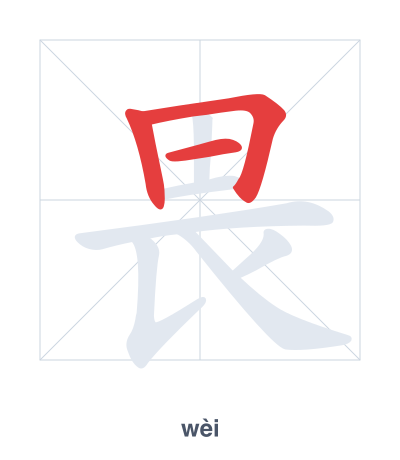
How to Write 畏 (wèi)

畏 (wèi) means "To fear / To dread" in Chinese. It has 9 strokes with the radical 田. Difficulty: 4/5.

wèi
9 strokes Radical: 田 Difficulty: 4/5

To fear / To dread

How to Write 畏

The character (wèi) is written with 9 strokes. Follow the standard Chinese stroke order: top to bottom, left to right, outside before inside. The radical is one of its key components.

Practice the correct stroke order with the Hanzi Writer app to see animated stroke-by-stroke guidance with real-time feedback.

Meaning & Pronunciation

is pronounced wèi in Mandarin Chinese. It means To fear / To dread.

Common Words with 畏

畏惧 wèi jù
To fear / Dread
畏缩 wèi suō
To recoil / To flinch
无所畏惧 wú suǒ wèi jù
Fearless and dauntless.

Example Sentences

他从不畏惧任何困难。

tā cóng bù wèi jù rèn hé kùn nán

He is never afraid of any difficulties.

遇到问题不要向后畏缩。

yù dào wèn tí bú yào xiàng hòu wèi suō

Don't shrink back when you encounter problems.

年轻人总是无所畏惧。

nián qīng rén zǒng shì wú suǒ wèi jù

Young people are always fearless.

Similar Characters

nán
diān
pīng
Stroke order practice for 畏 - wèi

Practice Writing 畏 (wèi)

Open Hanzi Writer to see the animated stroke order and practice writing 畏 with real-time feedback.

Frequently Asked Questions about 畏

Related Characters