Hanzi Writer

How to Write 痿 (wěi)

痿 (wěi) means "atrophy; impotence; paralysis" in Chinese. It has 13 strokes with the radical 疒. Difficulty: 4.2/5.

wěi
13 strokes Radical: 疒 Difficulty: 4.2/5

atrophy; impotence; paralysis

How to Write 痿

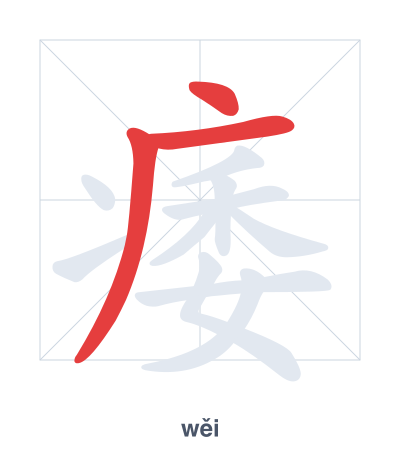
The character (wěi) is written with 13 strokes. Follow the standard Chinese stroke order: top to bottom, left to right, outside before inside. The radical is one of its key components.

Practice the correct stroke order with the Hanzi Writer app to see animated stroke-by-stroke guidance with real-time feedback.

Meaning & Pronunciation

is pronounced wěi in Mandarin Chinese. It means atrophy; impotence; paralysis.

Common Words with 痿

痿缩 wěi suō
atrophy; shrinkage
痿弱 wěi ruò
weak and atrophied
阳痿 yáng wěi
impotence

Example Sentences

他的肌肉开始痿缩。

tā de jī ròu kāi shǐ wěi suō

His muscles are starting to atrophy.

他的身体十分痿弱。

tā de shēn tǐ shí fēn wěi ruò

His body is very weak and atrophied.

这种药可以治阳痿。

zhè zhǒng yào kě yǐ zhì yáng wěi

This medicine can treat impotence.

Similar Characters

quán
Stroke order practice for 痿 - wěi

Practice Writing 痿 (wěi)

Open Hanzi Writer to see the animated stroke order and practice writing 痿 with real-time feedback.

Frequently Asked Questions about 痿

Related Characters