Hanzi Writer

How to Write 疵 (cī) — Meaning “flaw”

11 strokes Radical: 疒

疵 (cī) means "flaw" in Chinese. It has 11 strokes with the radical 疒.

Rated 4.2/5 in difficulty (advanced).

Appears in 3+ common words including 瑕疵 (xiá cī), 吹毛求疵 (chuī máo qiú cī), 疵点 (cī diǎn).

Due to its 11 strokes, Hanzi Writer's error detection shows 疵 requires focused practice — most learners need 10+ attempts for consistent accuracy.
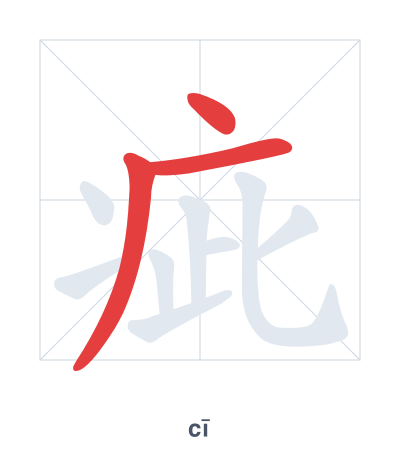
Stroke order practice for 疵 - cī

Practice Writing 疵 (cī)

Open Hanzi Writer to see the animated stroke order and practice writing 疵 with real-time feedback.

The character (cī) is written with 11 strokes. Follow the standard Chinese stroke order: top to bottom, left to right, outside before inside. The radical is one of its key components.

Practice the correct stroke order with the Hanzi Writer app to see animated stroke-by-stroke guidance with real-time feedback.

means flaw.

Character
Pinyincī (ci)
Meaningflaw
Strokes11
Radical
Difficulty4.2/5

The character 疵 combines the radical 疒 (illness/defect) with 此 (this), where 此 provides phonetic value and suggests 'this particular spot.' It originally denoted a small blemish or skin disease, visually indicating a specific flaw on the body.

💡 Memory Tip: Picture a sick person (疒) pointing at 'this' (此) spot on their arm and saying, 'This is the flaw.'

xiá cī
Flaw; defect; imperfection.
chuī máo qiú cī
to nitpick
cī diǎn
defect

这个杯子有瑕疵。

zhè ge bēi zi yǒu xiá cī

This cup has a flaw.

别总是吹毛求疵。

bié zǒng shì chuī máo qiú cī

Don't always nitpick.

衣服上有一个疵点。

yī fú shàng yǒu yí gè cī diǎn

There is a flaw on the clothes.

Character Pinyin Strokes Radical
(current) 11
yóu 9
9
jiè 9
Stroke order practice for 疵 - cī

Practice Writing 疵 (cī)

Open Hanzi Writer to see the animated stroke order and practice writing 疵 with real-time feedback.

✨ Animated stroke order · Handwriting recognition · HSK-graded practice · Free to use

Frequently Asked Questions about 疵

The character 疵 combines the radical 疒 (illness) on the outside with 此 (this) inside. The radical suggests a health-related flaw, while 此 acts as a phonetic component. Together they indicate a defect or imperfection, like a blemish on the body.

Characters with Radical 疒

Other 11-Stroke Characters