Hanzi Writer

How to Write 褪 (tuì)

褪 (tuì) means "to fade; to take off (clothes); to shed" in Chinese. It has 14 strokes with the radical 衤. Difficulty: 4.2/5.

tuì / tùn
14 strokes Radical: 衤 Difficulty: 4.2/5

to fade; to take off (clothes); to shed

How to Write 褪

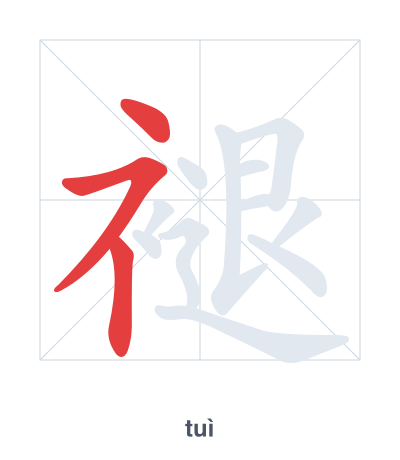
The character (tuì) is written with 14 strokes. Follow the standard Chinese stroke order: top to bottom, left to right, outside before inside. The radical is one of its key components.

Practice the correct stroke order with the Hanzi Writer app to see animated stroke-by-stroke guidance with real-time feedback.

Meaning & Pronunciation

is pronounced tuì in Mandarin Chinese. It means to fade; to take off (clothes); to shed.

This is a polyphonic character with readings: tuì, tùn.

Common Words with 褪

褪色 tuì shǎi
to fade (color)
褪去 tùn qù
to fade away; to take off; to shed
褪毛 tuì máo
to shed hair or feathers; to pluck

Example Sentences

这件衣服褪色了。

zhè jiàn yī fú tuì shǎi le

This piece of clothing has faded.

他褪去了外套。

tā tùn qù le wài tào

He took off his coat.

小鸟正在褪毛。

xiǎo niǎo zhèng zài tuì máo

The little bird is molting.

Similar Characters

chéng
qún
Stroke order practice for 褪 - tuì

Practice Writing 褪 (tuì)

Open Hanzi Writer to see the animated stroke order and practice writing 褪 with real-time feedback.

Frequently Asked Questions about 褪

Related Characters