Hanzi Writer

How to Write 嗣 (sì) — Meaning “To inherit or descendants.”

13 strokes Radical: 口

嗣 (sì) means "To inherit or descendants." in Chinese. It has 13 strokes with the radical 口.

Rated 4.2/5 in difficulty (advanced).

Appears in 3+ common words including 后嗣 (hòu sì), 嗣后 (sì hòu), 嗣位 (sì wèi).

Due to its 13 strokes, Hanzi Writer's error detection shows 嗣 requires focused practice — most learners need 10+ attempts for consistent accuracy.
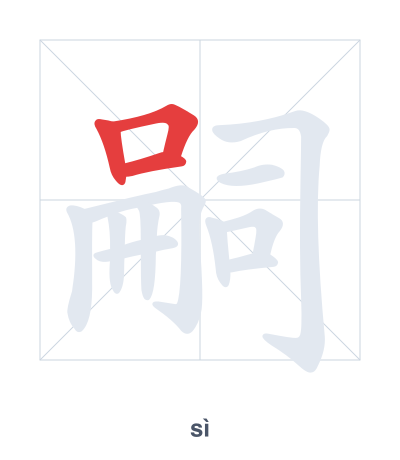
Stroke order practice for 嗣 - sì

Practice Writing 嗣 (sì)

Open Hanzi Writer to see the animated stroke order and practice writing 嗣 with real-time feedback.

The character (sì) is written with 13 strokes. Follow the standard Chinese stroke order: top to bottom, left to right, outside before inside. The radical is one of its key components.

Practice the correct stroke order with the Hanzi Writer app to see animated stroke-by-stroke guidance with real-time feedback.

means To inherit or descendants..

Character
Pinyinsì (si)
MeaningTo inherit or descendants.
Strokes13
Radical
Difficulty4.2/5

嗣 combines 口 (mouth), 司 (to manage), and 册 (bamboo slips). The 册 represents a written record of lineage, 司 suggests the act of managing succession, and 口 may indicate a spoken decree. Together they depict the formal process of inheritance or naming a descendant.

💡 Memory Tip: Picture a mouth (口) announcing the next manager (司) from the family record (册) — that's the heir.

hòu sì
heir; descendant
sì hòu
Thereafter or from then on.
sì wèi
To succeed to the throne.

他没有后嗣。

tā méi yǒu hòu sì

He has no heirs.

嗣后请多努力。

sì hòu qǐng duō nǔ lì

Please work harder from now on.

王子准备嗣位。

wáng zǐ zhǔn bèi sì wèi

The prince is preparing to succeed to the throne.

Character Pinyin Strokes Radical
(current) 13
14
fěng 11
jìn 11
Stroke order practice for 嗣 - sì

Practice Writing 嗣 (sì)

Open Hanzi Writer to see the animated stroke order and practice writing 嗣 with real-time feedback.

✨ Animated stroke order · Handwriting recognition · HSK-graded practice · Free to use

Frequently Asked Questions about 嗣

嗣 combines the radical 口 (mouth) on the left with the phonetic component 司 (sī, meaning "to manage") on the right. The 口 radical may connect to spoken commands or declarations about inheritance, while 司 suggests the idea of managing or continuing a family line, so together they convey the concept of inheriting or descendants.

Characters with Radical 口

Other 13-Stroke Characters