啉 (lín) means "Phonetic character (often used in chemical terms)." in Chinese. It has 11 strokes with the radical 口.
Rated 4.2/5 in difficulty (advanced).
Appears in 3+ common words including 喹啉 (kuí lín), 卟啉 (bǔ lín), 啉啉 (lín lín).
Due to its 11 strokes, Hanzi Writer's error detection shows 啉 requires focused practice — most learners need 10+ attempts for consistent accuracy.
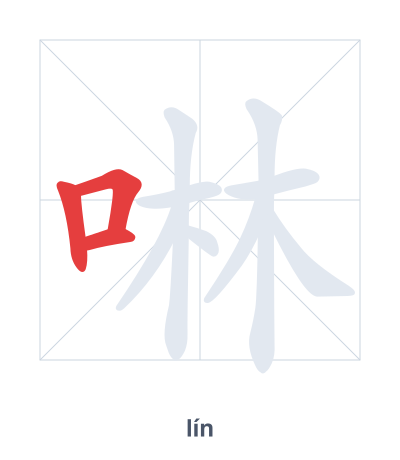
Open Hanzi Writer to see the animated stroke order and practice writing 啉 with real-time feedback.
The character 啉 (lín) is written with 11 strokes. Follow the standard Chinese stroke order: top to bottom, left to right, outside before inside. The radical 口 is one of its key components.
Practice the correct stroke order with the Hanzi Writer app to see animated stroke-by-stroke guidance with real-time feedback.
啉 means Phonetic character (often used in chemical terms)..
啉 is a phono-semantic compound: the mouth radical 口 indicates that the character originally related to sound or utterance, while 林 (lín, meaning 'forest') provides the pronunciation. When used in modern Chinese, 啉 acts solely as a phonetic component in chemical transliterations (e.g., 吗啉 for morpholine), losing its original semantic connection to the mouth.
💡 Memory Tip: Imagine a forest (林) whispering through many mouths (口), producing the sound 'lin'—perfect for remembering it's a phonetic character.
这种药含有喹啉。
zhè zhǒng yào hán yǒu kuí lín
This medicine contains quinoline.
医生在检查卟啉。
yī shēng zài jiǎn chá bǔ lín
The doctor is checking for porphyrins.
远处传来啉啉的声音。
yuǎn chù chuán lái lín lín de shēng yīn
A panting sound came from the distance.
Open Hanzi Writer to see the animated stroke order and practice writing 啉 with real-time feedback.
✨ Animated stroke order · Handwriting recognition · HSK-graded practice · Free to use
啉 is a left-right structure: the left side is 口 (mouth radical), and the right side is 林 (forest). The mouth radical hints at sound or speech, while 林 provides the pronunciation lín, making it a phonetic character used in chemical terms.