螂 (láng) means "Mantis/Dragonfly (character component)" in Chinese. It has 14 strokes with the radical 虫.
Rated 4.2/5 in difficulty (advanced).
Appears in 3+ common words including 蟑螂 (zhāng láng), 螳螂 (táng láng), 灭蟑螂 (miè zhāng láng).
Due to its 14 strokes, Hanzi Writer's error detection shows 螂 requires focused practice — most learners need 10+ attempts for consistent accuracy.
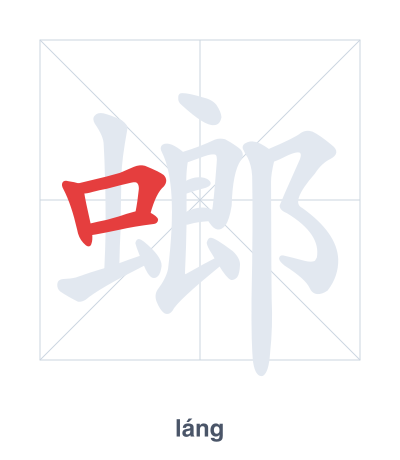
Open Hanzi Writer to see the animated stroke order and practice writing 螂 with real-time feedback.
The character 螂 (láng) is written with 14 strokes. Follow the standard Chinese stroke order: top to bottom, left to right, outside before inside. The radical 虫 is one of its key components.
Practice the correct stroke order with the Hanzi Writer app to see animated stroke-by-stroke guidance with real-time feedback.
螂 means Mantis/Dragonfly (character component).
螂 is a phono-semantic compound: the radical 虫 (insect) indicates it belongs to the insect category, while 朗 (lǎng, meaning 'bright' or 'clear') serves as the phonetic component, hinting at the pronunciation láng. The character specifically refers to the mantis (螳螂) or, in compounds, dragonfly (蜻蜓), with the insect radical anchoring its meaning.
💡 Memory Tip: Picture a mantis (虫) wearing a tiny bright lantern (朗) on its back, glowing as it stalks its prey.
厨房里有一只蟑螂。
chú fáng lǐ yǒu yī zhī zhāng láng
There is a cockroach in the kitchen.
螳螂在草丛里跳。
táng láng zài cǎo cóng lǐ tiào
The mantis is jumping in the grass.
我们要定期灭蟑螂。
wǒ men yào dìng qī miè zhāng láng
We should regularly exterminate cockroaches.
Open Hanzi Writer to see the animated stroke order and practice writing 螂 with real-time feedback.
✨ Animated stroke order · Handwriting recognition · HSK-graded practice · Free to use
螂 is made of the radical 虫 (insect) on the left and the phonetic component 郎 (láng) on the right. The 虫 part tells you the character relates to insects, while 郎 gives the pronunciation láng. This structure is common for characters naming insects like mantis or dragonfly.