Hanzi Writer

How to Write 嗔 (chēn) — Meaning “To be angry; to scold”

chēn 13 strokes Radical: 口

嗔 (chēn) means "To be angry; to scold" in Chinese. It has 13 strokes with the radical 口.

Rated 4.2/5 in difficulty (advanced).

Appears in 3+ common words including 嗔怪 (chēn guài), 嗔怒 (chēn nù), 嗔视 (chēn shì).

Due to its 13 strokes, Hanzi Writer's error detection shows 嗔 requires focused practice — most learners need 10+ attempts for consistent accuracy.
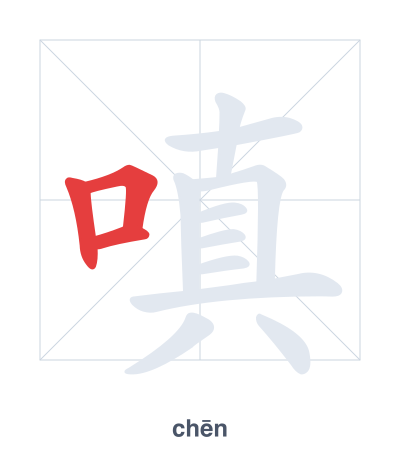
Stroke order practice for 嗔 - chēn

Practice Writing 嗔 (chēn)

Open Hanzi Writer to see the animated stroke order and practice writing 嗔 with real-time feedback.

The character (chēn) is written with 13 strokes. Follow the standard Chinese stroke order: top to bottom, left to right, outside before inside. The radical is one of its key components.

Practice the correct stroke order with the Hanzi Writer app to see animated stroke-by-stroke guidance with real-time feedback.

means To be angry; to scold.

Character
Pinyinchēn (chen)
MeaningTo be angry; to scold
Strokes13
Radical
Difficulty4.2/5

嗔 is a phono-semantic compound combining the mouth radical 口 (speaking) with 真 (zhēn, 'true') as a phonetic component. The mouth radical indicates the meaning relates to speech, and the character originally conveyed the sense of 'speaking angrily' or 'scolding with genuine anger.'

💡 Memory Tip: Picture a person whose mouth (口) is truly (真) furious, shooting out fiery words of anger.

chēn guài
To rebuke; to blame
chēn nù
Anger; indignation
chēn shì
To glare at

妈妈嗔怪我不听话。

mā mā chēn guài wǒ bù tīng huà

Mom chided me for being disobedient.

他脸上露出嗔怒。

tā liǎn shàng lù chū chēn nù

His face showed annoyance.

她嗔视了他一眼。

tā chēn shì le tā yī yǎn

She gave him a reproachful look.

Character Pinyin Strokes Radical
(current) chēn 13
14
fěng 11
jìn 11
Stroke order practice for 嗔 - chēn

Practice Writing 嗔 (chēn)

Open Hanzi Writer to see the animated stroke order and practice writing 嗔 with real-time feedback.

✨ Animated stroke order · Handwriting recognition · HSK-graded practice · Free to use

Frequently Asked Questions about 嗔

嗔 is composed of the radical 口 (mouth) on the left and the phonetic component 真 (zhēn, meaning 'true' or 'real') on the right. The mouth radical suggests speaking or expressing sound, while 真 provides the pronunciation and hints at the idea of 'genuine' anger. Together they form a character meaning 'to scold' or 'to be angry' through the mouth.

Characters with Radical 口

Other 13-Stroke Characters