Hanzi Writer

How to Write 酯 (zhǐ) — Meaning “ester”

zhǐ 13 strokes Radical: 酉

酯 (zhǐ) means "ester" in Chinese. It has 13 strokes with the radical 酉.

Rated 4.2/5 in difficulty (advanced).

Appears in 3+ common words including 乙酯 (yǐ zhǐ), 脂肪酯 (zhī fáng zhǐ), 磷酯 (lín zhǐ).

Due to its 13 strokes, Hanzi Writer's error detection shows 酯 requires focused practice — most learners need 10+ attempts for consistent accuracy.
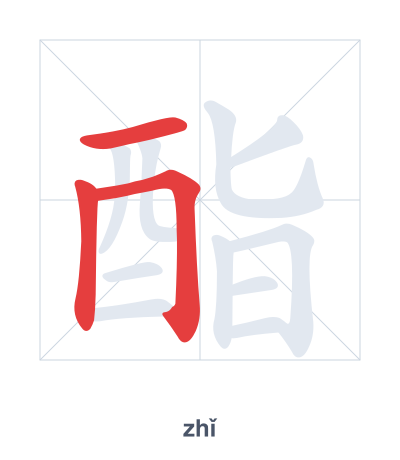
Stroke order practice for 酯 - zhǐ

Practice Writing 酯 (zhǐ)

Open Hanzi Writer to see the animated stroke order and practice writing 酯 with real-time feedback.

The character (zhǐ) is written with 13 strokes. Follow the standard Chinese stroke order: top to bottom, left to right, outside before inside. The radical is one of its key components.

Practice the correct stroke order with the Hanzi Writer app to see animated stroke-by-stroke guidance with real-time feedback.

means ester.

Character
Pinyinzhǐ (zhi)
Meaningester
Strokes13
Radical
Difficulty4.2/5

酯 is a phono-semantic compound formed from the radical 酉 (alcohol) and the phonetic component 旨 (meaning 'taste'), reflecting that esters are organic compounds derived from alcohols and often have distinctive fruity flavors. The 酉 radical appears in many chemical terms related to fermentation or alcohol, while 旨 contributes the sound zhǐ and hints at the sensory quality of esters.

💡 Memory Tip: In a wine vat (酉), a chef tastes a spoonful (旨) and exclaims, 'This ester is delicious!'

yǐ zhǐ
ethyl ester
zhī fáng zhǐ
fatty ester
lín zhǐ
phospholipid

乙酯有香味。

yǐ zhǐ yǒu xiāng wèi

Ethyl ester has a fragrant smell.

脂肪酯在体内分解。

zhī fáng zhǐ zài tǐ nèi fēn jiě

Fatty esters decompose in the body.

磷酯对身体有益。

lín zhǐ duì shēn tǐ yǒu yì

Phospholipids are beneficial to the body.

Character Pinyin Strokes Radical
(current) zhǐ 13
máo 11
zhèn 11
11
Stroke order practice for 酯 - zhǐ

Practice Writing 酯 (zhǐ)

Open Hanzi Writer to see the animated stroke order and practice writing 酯 with real-time feedback.

✨ Animated stroke order · Handwriting recognition · HSK-graded practice · Free to use

Frequently Asked Questions about 酯

The character 酯 combines the radical 酉 (meaning wine or fermentation) on the left with 旨 (meaning purpose or delicious) on the right. Since esters are often formed from alcohols and acids through fermentation-like processes, the 酉 radical hints at chemistry involving liquids, while 旨 suggests the pleasant smells of many esters.

Characters with Radical 酉

Other 13-Stroke Characters