Hanzi Writer

How to Write 窬 (yú) — Meaning “hole in a wall”

14 strokes Radical: 穴

窬 (yú) means "hole in a wall" in Chinese. It has 14 strokes with the radical 穴.

Rated 4.2/5 in difficulty (advanced).

Appears in 3+ common words including 穿窬 (chuān yú), 窬墙 (yú qiáng), 窦窬 (dòu yú).

Due to its 14 strokes, Hanzi Writer's error detection shows 窬 requires focused practice — most learners need 10+ attempts for consistent accuracy.
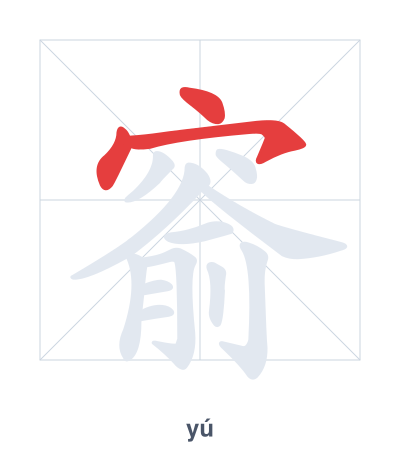
Stroke order practice for 窬 - yú

Practice Writing 窬 (yú)

Open Hanzi Writer to see the animated stroke order and practice writing 窬 with real-time feedback.

The character (yú) is written with 14 strokes. Follow the standard Chinese stroke order: top to bottom, left to right, outside before inside. The radical is one of its key components.

Practice the correct stroke order with the Hanzi Writer app to see animated stroke-by-stroke guidance with real-time feedback.

means hole in a wall.

Character
Pinyinyú (yu)
Meaninghole in a wall
Strokes14
Radical
Difficulty4.2/5

窬 combines the radical 穴 (cave/hole) with 俞 (yú), which acts phonetically and also hints at the action of cutting or boring through. Together they depict a hole made through a wall, like a small passage or opening.

💡 Memory Tip: Imagine a thief using a sharp blade (俞) to carve a secret hole in a wall (穴) to sneak through.

穿 chuān yú
To bore a hole through a wall / burglary
yú qiáng
to climb over a wall (through a hole)
dòu yú
hole in a wall

这种行为属于穿窬。

zhè zhǒng xíng wéi shǔ yú chuān yú

This behavior is akin to burglary.

他窬墙而入。

tā yú qiáng ér rù

He climbed over the wall to enter.

墙上有一个窦窬。

qiáng shàng yǒu yí gè dòu yú

There is a small hole in the wall.

Character Pinyin Strokes Radical
(current) 14
jiào 12
chuāng 12
jiǒng 12
Stroke order practice for 窬 - yú

Practice Writing 窬 (yú)

Open Hanzi Writer to see the animated stroke order and practice writing 窬 with real-time feedback.

✨ Animated stroke order · Handwriting recognition · HSK-graded practice · Free to use

Frequently Asked Questions about 窬

The top is the radical 穴 (cave), showing that the character is related to holes or caves. The bottom is 俞 (yú, a phonetic component), which gives the pronunciation but also suggests the idea of a passage or opening. Together, 穴 + 俞 forms the meaning "a hole in a wall."

Characters with Radical 穴

Other 14-Stroke Characters